Your outfit is sorted. You've picked the place. You know what time to leave. And yet, forty minutes before the date, your chest is doing something weird and your brain has decided this is the perfect moment to replay every awkward silence you've ever experienced. The confidence you felt when you made the plan has completely evaporated — and you're standing in your kitchen wondering where it went.
Here's the thing most dating advice gets wrong: they treat confidence like a personality setting, something you either have or you don't. So when it disappears on you right before a first date, the conclusion feels personal. Like you're just not a confident person. That framing is not only unhelpful — it's factually wrong. Confidence is a physical and temporal state. Your body and your schedule either support it or undermine it, and almost nobody thinks about it that way.
The real question isn't "how do I feel more confident?" It's "what conditions produce confidence, and can I engineer them?" The answer is yes — and once you see it that way, a first date stops being a test of your personality and starts being something you can actually prepare for.
Why Does Confidence Feel So Hard to Access Right Before a First Date?
Confidence collapses before a first date because your nervous system treats social uncertainty the same way it treats physical threat. Your cortisol spikes, your working memory narrows, and your brain starts running worst-case simulations. This isn't a character flaw — it's threat-detection doing its job badly in a context it wasn't built for.
A lot of people assume the nerves mean something — that they signal unreadiness, or that the date matters too much, or that they're somehow less capable than people who seem relaxed. But the physiological response is almost identical whether you're genuinely underprepared or just standing in an unfamiliar emotional situation. Your body doesn't know the difference. That's why managing first-date nerves isn't about thinking your way calm — it's about working with your physiology, not against it.
The other reason confidence feels so elusive is timing. Most people try to generate it in the thirty minutes before they walk out the door, which is exactly when cortisol is peaking and your internal critic is loudest. That window is the worst possible time to build confidence from scratch. The skill is in setting yourself up hours — sometimes days — earlier.
This is where the Date Timeline becomes genuinely useful. The idea is simple: a date has three phases — Before, During, and Follow-Up — and most of the outcome is decided in the phases that aren't the date itself. Confidence is built in the Before phase, not conjured during it. When you start treating the hours before a date as active preparation rather than anxious waiting, the whole experience shifts.
How Does the Date Timeline Help You Build Confidence Before You Even Leave the House?
The Before phase of the Date Timeline isn't about rehearsing lines or running through conversation scenarios until you've memorized them. It's about removing the variables that drain your nervous system before you've even said hello. Decision fatigue, physical depletion, and time pressure are three of the biggest confidence killers — and all three are entirely preventable.
Decide your outfit the night before. Eat something real a couple of hours before you leave. Build in a buffer so you're not rushing. These aren't life hacks — they're basic conditions that free up cognitive and emotional bandwidth. When your body isn't managing hunger or your brain isn't scrambling to find parking, you have more capacity to actually be present. And presence is what confidence looks like from the outside.
One thing that works particularly well: do something physical in the two hours before a date. Not a full workout if that stresses you out, but a walk, a short run, even twenty minutes of movement. Exercise drops cortisol and raises your baseline mood in ways that are measurable and fast. You're not trying to tire yourself out — you're trying to shift your body's chemical state before you arrive. This is the kind of preparation that making a strong first impression actually depends on, even though nobody talks about it.
The other Before-phase move is to do something that reminds you of your own competence. Not affirmations in the mirror — something real. Listen to a conversation you had that went well. Read a message from a friend who made you laugh. Spend fifteen minutes on something you're good at. Your brain is priming itself for social interaction; give it good material to work from. If you want to go deeper on the full picture, there's a lot more to unpack about how to have better first dates across every phase of the experience.
Map out the Before phase of your next date using the Date Timeline framework — this takes under five minutes and changes how the whole day feels.
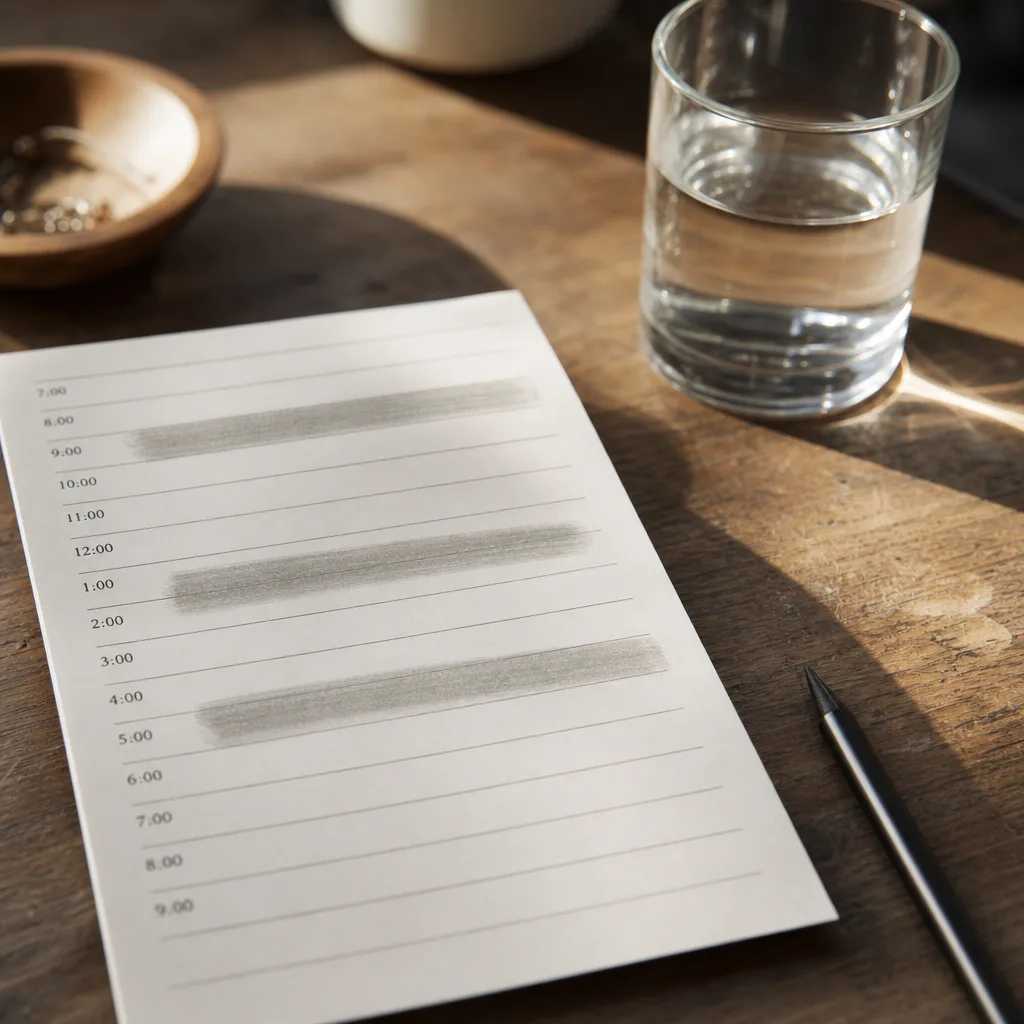
- Write down the date time, then work backwards: when will you eat, when will you move your body, when will you decide what to wear? Block those as fixed points.
- Identify one thing you'll do in the final hour before leaving that has nothing to do with the date — something you enjoy or that makes you feel capable.
- Set a hard "stop prepping" time, thirty minutes before you leave, after which you do not check your phone for their messages or rehearse conversation topics.

What Can You Do In the Moment When Nerves Spike Mid-Date?
Even with solid preparation, nerves can surge mid-date. Someone asks an unexpected question, there's a lull in conversation, or you suddenly become very aware of your own hands. This is normal, and the fix isn't to suppress the feeling — it's to redirect your attention outward.
The fastest in-the-moment technique is to get genuinely curious about the other person. Not performatively curious — actually curious. Ask a follow-up question about something they just said. The shift from "how am I coming across?" to "what did they mean by that?" is a neurological gear change. You can't be self-conscious and other-focused at the same time; your brain doesn't have the bandwidth. This is also why having a loose sense of conversation territory helps — not a script, just a few areas you're genuinely interested in exploring.
Slowing down physically also works. Slow your speech by about ten percent. Take a breath before you answer a question. Pick up your drink. These micro-pauses signal calm to your nervous system even when you don't feel calm yet — and they read as confidence to the other person. Fast, pressured talking is one of the clearest tells of anxiety; deliberate pacing is one of the clearest signals of ease.
If you feel a lull coming, don't panic into it. Silences feel longer to you than they do to the other person — research consistently shows this. A two-second pause feels like ten seconds from the inside. Running out of things to say is a fear most people share, but the solution isn't to fill every gap — it's to be comfortable enough with pauses that they don't derail you.
Should You Fake Confidence or Work With What You Actually Have?
The "fake it till you make it" advice has a grain of truth in it — posture, pace, and tone do influence how you feel, not just how you're perceived. But there's a version of faking confidence that backfires badly: performing a character who isn't you, which creates a weird dissonance the other person can usually sense even if they can't name it.
Before you read on — how would you respond if your date asked "Are you nervous?"
Take 10 seconds. Then compare with the example below.
The better approach is to work with your actual state rather than against it. If you're nervous, you don't need to hide it — you need to not be derailed by it. There's a difference between feeling nervous and acting nervous. You can feel the adrenaline and still ask a good question, still make eye contact, still laugh at something genuinely funny. The feeling doesn't have to run the show.
This is also where being yourself on a first date stops being vague advice and becomes a practical strategy. When you're not spending energy maintaining a performance, you have more capacity for actual connection. And actual connection is what makes a date go well — not the impression of confidence, but the experience of two people genuinely engaging. That's a skill you can build, not a trait you either have or don't. This is exactly the kind of scenario the practice mode in Dating Coach is built for: rehearsing real moments so they feel less foreign when they happen.
How Do You Know If Your Confidence Is Growing Across Dates, Not Just Surviving Them?
Surviving a date and growing from it are two different things. A lot of people finish a date, exhale with relief, and then don't think about it again until the next one — at which point the same nerves show up and the cycle repeats. The Follow-Up phase of the Date Timeline is where that pattern breaks.
After a date, spend five minutes on a quick debrief — not a forensic analysis of everything that went wrong, just three questions: What felt natural? What felt forced? What would I do differently? This isn't self-criticism; it's data collection. Over time, you'll notice patterns. Maybe you're great at the first twenty minutes and then lose steam. Maybe you ask good questions but don't share enough about yourself. Patterns are fixable. Vague feelings of "that didn't go well" are not. Reading how a date actually went is a skill in itself, and it feeds directly into how you prepare for the next one.
The signal that confidence is genuinely growing — not just varying by date — is that your baseline shifts. Early on, a good date feels like luck and a bad one feels like evidence of something permanent. As the skill develops, both outcomes feel more like information. You start to notice what you can control and what you can't, and you stop treating every date as a referendum on your worth. That shift doesn't happen from reading about confidence. It happens from building dating confidence through actual repetition and reflection.
One concrete marker: track how long the pre-date anxiety window lasts. If it used to start three days before and now it starts three hours before, that's real progress. If you used to need a drink to settle your nerves and now you don't, that's real progress. The goal isn't zero nerves — it's nerves that don't run the show. And you can measure that.
The Follow-Up phase also includes what happens after the date in terms of communication. Part of that is knowing how to end a first date well — the goodbye sets the tone for everything that follows. Knowing what to text after a first date and actually sending it without agonizing for two hours is itself a confidence indicator. The whole Date Timeline — Before, During, Follow-Up — is a loop that tightens with practice.
Confidence on a first date was never about being a certain kind of person. It's about being in a certain kind of state — one that you can prepare your body and your schedule to support. That's not a small reframe. It means the work happens before you walk in the door, and the growth happens after you walk out. The date itself is just the middle part.
When you start treating confidence as something you build across time rather than summon in the moment, first dates stop feeling like auditions and start feeling like practice — which is exactly what they are. Each one gives you more data, more familiarity with the feeling, and a slightly shorter gap between anxious and settled. That gap closing is the skill. Keep going.