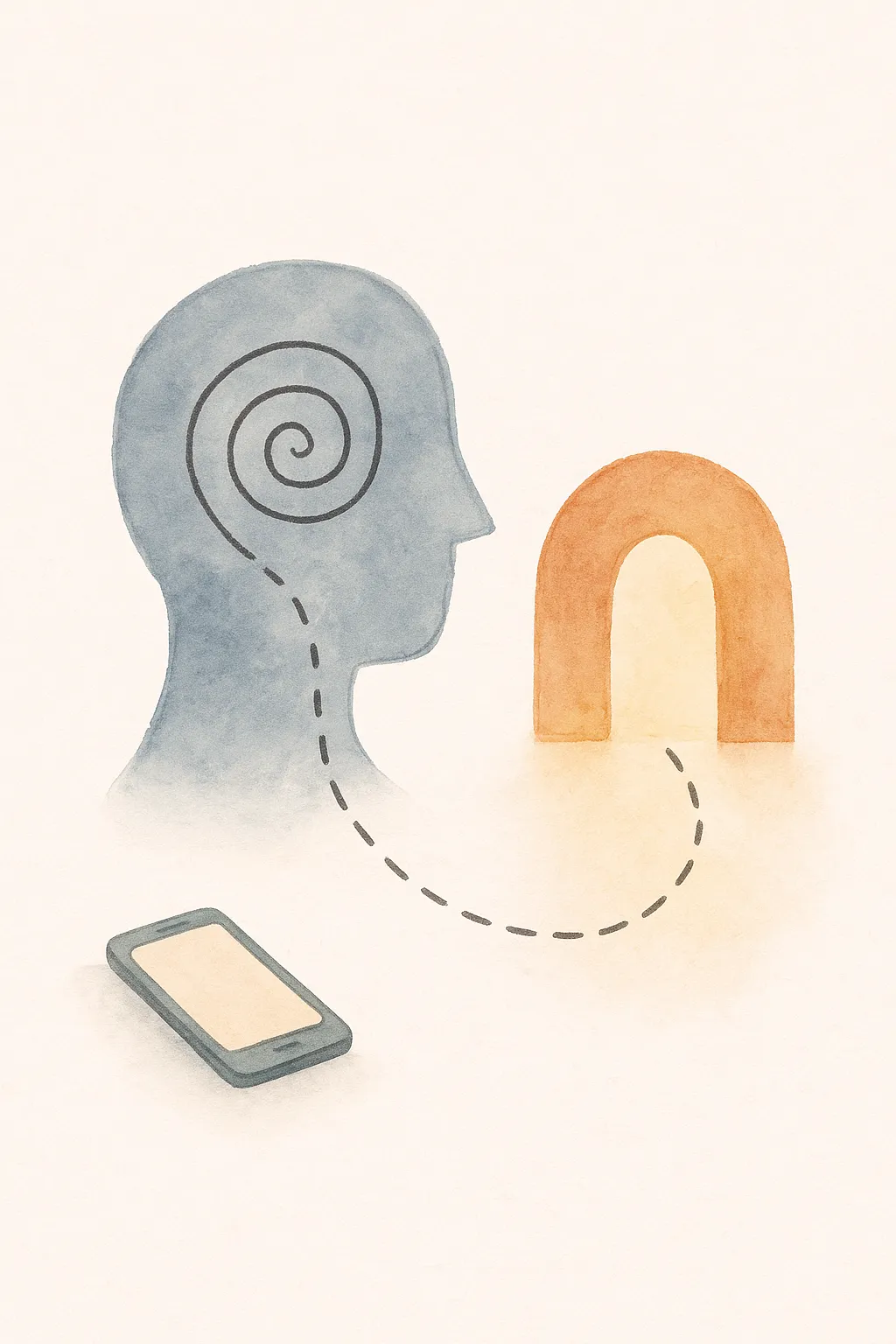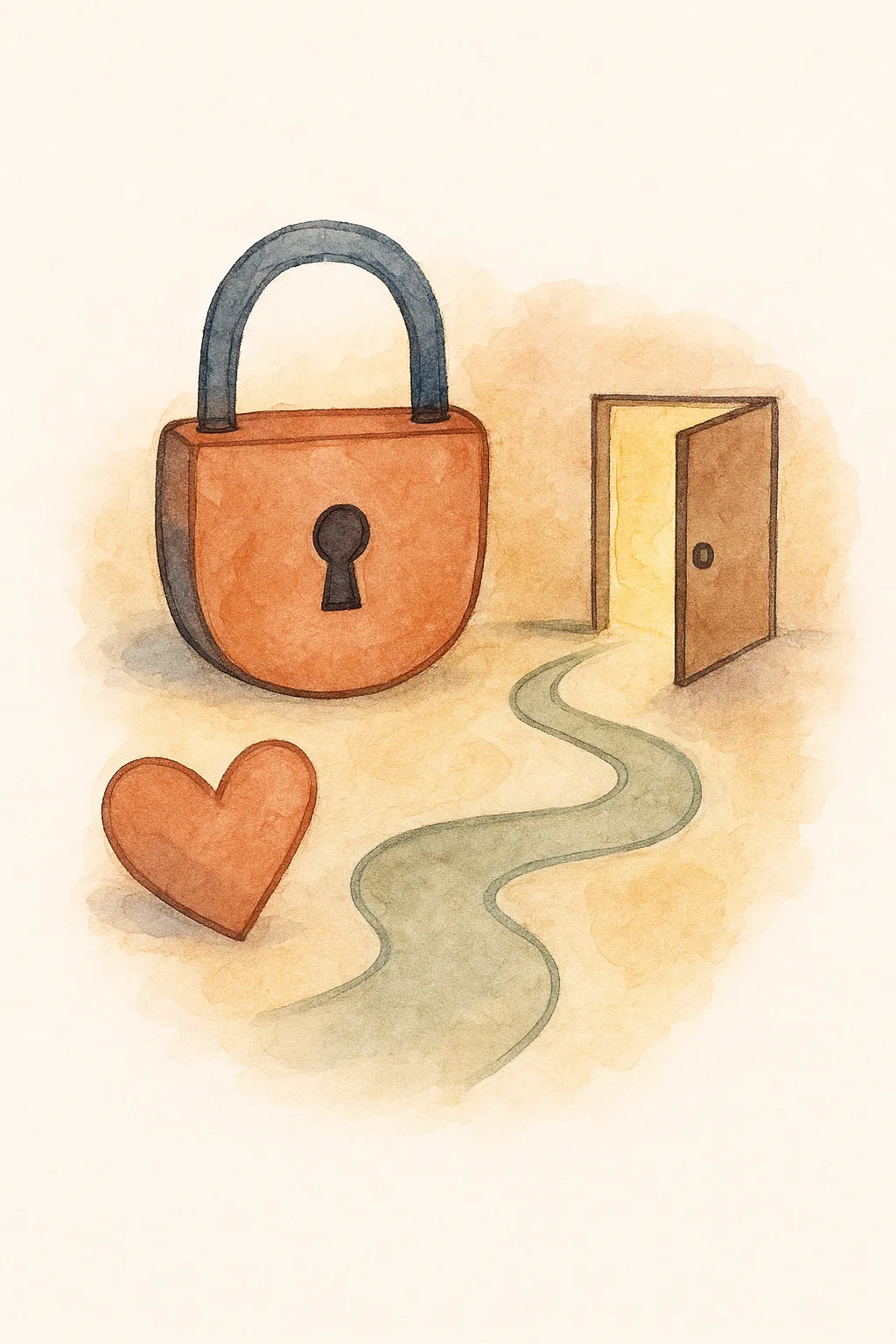
You did everything you were supposed to do. You put yourself out there, sent a message, maybe even went on a date. And then — nothing. Or worse, something that felt promising just fizzled out for no reason you can identify. So you sit there wondering what you're missing, running through the interaction on a loop, trying to find the flaw.
Here's the thing nobody tells you: that feeling isn't evidence that you're bad at dating. It's evidence that dating is a skill set nobody formally teaches. You're expected to just know how to navigate rejection, read signals, text the right thing at the right time, and project confidence — all without ever practicing any of it in a low-stakes environment. That's not a personal failing. That's a structural problem.
The real question isn't "what's wrong with me?" It's "what exactly am I supposed to be learning, and how?" That's what this article is about — breaking down why dating feels so hard at a systemic level, and what you can actually do to get better at it.
Why Does Dating Feel So Hard Even When You're Doing Everything Right?
Dating feels hard even when you're doing everything right because the feedback loop is broken. Unlike most skills, dating gives you almost no useful information when things go wrong — you don't know if it was your opener, your timing, their mood, or pure chance. Without clear feedback, you can't improve, and without improvement, confidence never builds.
Think about learning to drive. You get immediate feedback — the car drifts, you correct, you learn. Dating doesn't work like that. Someone doesn't reply, and you're left guessing across a dozen possible variables. Most people respond by blaming themselves globally ("I'm just bad at this") rather than identifying a specific, fixable thing. That global blame is what makes dating feel so heavy.
A lot of people also carry the assumption that confident, successful daters were just born that way — that some people have a natural gift for connection and others don't. Research on social skill development consistently shows the opposite: what looks like natural charm is almost always accumulated experience. The people who seem effortless have usually just had more reps, more feedback, and more recovery from failure.
This is where the Confidence Loop becomes the most useful reframe you'll find. Confidence isn't what you need before you start — it's what you get after you build a skill, practice it, and get a win. Skill leads to practice, practice leads to wins, wins build confidence. Run that loop enough times and the person who "just seems confident" is you. The entry point is always skill, never confidence itself.
How Does the Modern Dating Environment Turn Normal Social Skills Into a Confidence Drain?
Dating apps were supposed to make meeting people easier. In some ways they did. But they also introduced a layer of ambiguity that normal social interaction never had. When you meet someone at a party, you get tone of voice, eye contact, body language — a whole channel of information. Over text, you get a string of characters and a timestamp. That's a genuinely harder environment to read, and most people are interpreting silence and slow replies as personal rejection when it's often just the nature of the medium.
The volume problem compounds this. Apps create an environment where you might be talking to several people at once, and so might they. That's not inherently bad, but it does mean that any single interaction carries less weight for the other person than it might feel like it carries for you. The asymmetry is disorienting. You've been thinking about this conversation all morning; they forgot to reply because they were at work. Overthinking texts is almost a guaranteed outcome of this environment — not a sign that you're neurotic.
Rejection also hits differently in the digital context. When someone ghosts you, there's no closure, no explanation, no social consequence for the person doing it. Your nervous system registers it as rejection, but you don't get the social information that would normally help you process it and move on. That's not a weakness in you — it's a design flaw in the environment.
The confidence drain happens because all of this ambiguity feeds a cycle of second-guessing. You start editing yourself, pulling back, over-managing how you come across. That self-monitoring is exhausting and it makes you less natural, which makes dates go worse, which confirms the story that you're bad at this. None of that is inevitable — it's a pattern you can interrupt once you see it clearly.
What Is the Confidence Loop and How Does It Explain Why Effort Alone Isn't Enough?
A lot of people put enormous effort into dating and still don't improve — and this is the part that feels most demoralizing. You're trying. You're showing up. Why isn't it working? The answer is usually that effort without skill development is just repetition of the same patterns. You're practicing the same anxious version of yourself, not a more capable version.
The Confidence Loop explains this gap. Effort is not the same as deliberate skill building. If you go on ten dates while staying in your head, managing your anxiety, and hoping for the best, you're not running the loop — you're just surviving ten dates. The loop requires you to identify a specific skill, practice it intentionally, and notice when it produces a better outcome. That win, however small, is what generates confidence. Not the effort itself.
Think about what this looks like concretely. Say you struggle with running out of things to say on dates. The effort-only approach is to go on more dates and hope it gets easier. The skill-building approach is to practice asking open-ended follow-up questions specifically — to notice when a question lands well, to feel the conversation open up, and to carry that small win into the next date. That's the loop.
Before you read on — which specific dating skill do you most want to improve right now?
Take 10 seconds. Name one thing: starting conversations, handling rejection, texting, first dates. Then read on with that skill in mind.
This is exactly the kind of scenario the practice mode in Dating Coach is built for — isolating one skill, running it in a low-stakes environment, and building the feedback loop that normal dating doesn't give you. The goal isn't perfection. It's getting enough small wins that your nervous system starts associating dating with capability rather than threat.
Pick one skill from the Confidence Loop to work on this week — just one.
- Write down the specific moment in dating where you feel most stuck (e.g., "I freeze when I don't know how to reply to a slow texter")
- Find one article or resource that addresses that exact skill — not dating in general, but that specific gap
- Before your next interaction, set a single intention: "I'm going to practice X in this conversation" — not "I'm going to be great," just one thing

How Can You Break the Cycle of Anxiety and Avoidance That Makes Dating Harder Over Time?
Anxiety and avoidance have a relationship that most people don't fully see until they're deep in it. Anxiety makes dating feel threatening. Avoidance reduces the immediate discomfort. So you avoid, you feel better short-term, and your nervous system learns that avoidance works. Except now dating feels even more threatening the next time, because you've had less practice and the stakes feel higher. This is how fear of rejection compounds over time — not because you're getting worse, but because avoidance is quietly raising the perceived cost of every interaction.
Breaking this cycle doesn't require some dramatic leap of courage. It requires making the exposure smaller, not bigger. If asking someone out feels impossible, the skill to practice isn't asking someone out — it's starting a low-stakes conversation with a stranger. If texting first feels loaded with risk, practice texting something light and low-investment before you work up to something that matters more. Approach anxiety responds to graduated exposure, not to willpower.
The other thing that perpetuates the cycle is catastrophizing outcomes. Most people overestimate how bad rejection actually feels and underestimate how quickly they recover. If you've ever been rejected and then been completely fine a week later, you already have evidence that your prediction was wrong. Recovering from rejection is itself a skill — one that gets faster with practice, not one you need to avoid by never putting yourself out there.
One practical shift: start tracking what actually happens, not what you feared would happen. You sent a text you were nervous about — what actually happened? You asked someone out — what actually happened? Most of the time, the outcome is far more neutral than the anxiety predicted. Keeping even a rough mental log of this starts to recalibrate your threat assessment over time.
How Do You Know When Dating Is Getting Easier — and What Should You Build Toward Next?
Progress in dating is subtle, which means most people miss it. You don't wake up one day and suddenly feel fearless. What actually happens is smaller: you notice you recovered from a rejection faster than last time. You sent a text without agonizing over it for twenty minutes. You had a first date where you were actually present instead of performing. These are real wins, and they're the Confidence Loop working exactly as it should.
One reliable signal that things are shifting: your attention moves from yourself to the other person. Early on, most of your mental bandwidth on a date goes toward managing how you're coming across — am I being interesting enough, am I talking too much, do they like me? As skill builds, that self-monitoring quiets down and you start genuinely getting curious about the person in front of you. Dates get better almost automatically when that happens, because curiosity is more attractive than performance.
Once the basics feel more manageable, the next layer to build is dating confidence in higher-stakes moments — being direct about what you want, handling mixed signals without spiraling, knowing how to move from texting to an actual date. These feel hard at first for the same reason everything else did: nobody taught you the skill. But now you have the loop. You know how to enter it.
What to build toward next depends on where your specific gap is. If rejection still stings more than it should, that's the skill to target. If you're good at first dates but things fizzle after, the skill is probably in reading interest accurately and following up with intention. Dating isn't one skill — it's a cluster of them, and you don't have to fix all of them at once. You just have to keep running the loop.
The difficulty you've been experiencing isn't a verdict on your worth or your attractiveness or your personality. It's a skills gap in a domain where nobody gets formal training. That's the whole story. And skills gaps, by definition, close with practice. Building real confidence in dating doesn't start with believing in yourself more — it starts with getting better at something small, noticing that it worked, and doing it again.
That's the shift this reframe is trying to hand you. Not "dating is hard but you can do it" — but "dating is hard because it's a learnable skill that nobody teaches, and you're now treating it like one." When you practice with that lens, the whole thing changes. Not overnight. But faster than you think.