Confidence

Confident people weren't born confident. They built it.

That sentence is going to bother some people, because the idea that confidence is a fixed trait — you either have it or you don't — is one of the most persistent myths in dating. It lets you off the hook. If confidence is something you're born with, then there's nothing to be done. You're just stuck with whatever you got.

Except that's not how it works. Confidence is a skill output, not a personality input. It's the result of repeated practice producing competence. You feel confident at things you've done enough times to know you can handle them. That's the entire secret. The person across from you at the party, the one who seems effortless in conversation, isn't operating on magic. They're just further along the same path available to you.

The Confidence Loop

Confidence doesn't come from reading about confidence. It doesn't come from affirmations in the mirror. It doesn't come from pretending to feel something you don't. It comes from a specific cycle that, once understood, you can trigger deliberately.

Step 1: Skill

You learn a specific, applicable social or communication skill. Not theory — a concrete thing you can do. How to start a conversation with a stranger. How to hold eye contact comfortably. How to transition from small talk to something real. How to recover from a joke that didn't land. The skill has to be specific enough that you know what you're practicing. "Be more confident" is not a skill. "Ask one open-ended question per conversation" is.

Consider the challenge of asking someone out on a date. This is a concrete skill that involves timing, tone, and context. You might start by asking friends for feedback on your approach or practicing in low-stakes environments like social gatherings with familiar faces. Each attempt, successful or not, refines your skill set.

Step 2: Practice

You use the skill in a real or simulated environment. This is where it gets uncomfortable, and that discomfort is non-negotiable. There is no version of building confidence that skips the part where you feel awkward. Even NBA players miss free throws in practice. The practice isn't about being perfect — it's about accumulating reps. Most people treat practice as performance, where every rep must succeed. That mindset prevents learning. Real practice assumes the reps will be uneven. The point is frequency.

Think about the discomfort of practicing eye contact. Initiating and maintaining eye contact is a skill that can drastically improve your communication. Start with holding eye contact for a few seconds longer each time, perhaps during short interactions like ordering coffee. Over time, your comfort level will increase, translating into smoother social exchanges.

Step 3: Small Win

Something works. Maybe the conversation lasted longer than usual. Maybe someone laughed at your joke. Maybe you just survived an interaction you would have avoided last month. The win doesn't have to be big. It has to be noticed. Most people bulldoze past their small wins because they're focused on what went wrong. The trick is deliberate recognition — after any challenging interaction, force yourself to name one thing that worked before you name anything that didn't.

Imagine you're at a networking event and manage to keep a conversation going for more than five minutes. That's a small win. Recognizing these victories reinforces your progress, encouraging you to continue honing your skills. Each small success builds your confidence incrementally.

Step 4: Confidence

The small win registers as evidence that you can do this. Your brain updates its prediction model: "This situation is less dangerous than I thought." That updated prediction is confidence. It's not a feeling you summon — it's a recalibration based on evidence. This is why fake-it-till-you-make-it only partially works: if there's no real practice and no real win, your brain has nothing to update against.

Confidence derived from genuine experience is far more sustainable than any amount of superficial self-assurance. When you experience real success, even in small forms, you give your brain the necessary data to adjust its expectations, reinforcing your belief in your capabilities.

Step 5: More Practice

Confidence makes you more willing to practice. More practice produces more small wins. More small wins produce more confidence. The Confidence Loop accelerates. This is why people who seem naturally confident aren't operating on magic — they're further along in the loop. They've done more reps. The compounding is real and, once it starts, it's hard to stop.

As you continue practicing, consider expanding your comfort zone. If you've become skilled at initiating conversations, try steering them towards deeper topics or introducing light humor. Each new skill layer you add contributes to the compounding effect of the Confidence Loop.

Approach Anxiety

Your palms sweat. Your heart rate spikes. Your brain generates seventeen reasons why now isn't the right time. Roughly 40% of adults report approach anxiety as a regular experience in social contexts.

Approach anxiety is your nervous system doing its job — flagging a socially risky situation. The problem isn't the anxiety. It's that the threat assessment is wildly out of proportion. Your brain is treating a potential conversation like a potential tiger. Evolution didn't distinguish between "physically dangerous" and "socially risky" because for most of human history they were the same thing.

The fix isn't to eliminate the anxiety — it's to build enough experience that your nervous system recalibrates. This happens through graduated exposure: start with interactions that trigger mild discomfort and gradually work up. Say hi to the barista. Ask a stranger for directions. Compliment someone at the gym. Each successful small interaction is data that your brain uses to revise its threat model.

For those finding it difficult to initiate, even small steps like maintaining a friendly demeanor or offering a simple compliment can be a good start. Over time, these small gestures will help recalibrate your nervous system, making each subsequent interaction less daunting. For more strategies on overcoming these fears, you can explore our guide on how to approach someone you like.

Explore by topic

Fear of Rejection

Fear of rejection isn't a character flaw. It's a deeply embedded survival mechanism. In ancestral environments, social rejection could literally mean death — exile from the tribe was often a death sentence. Your brain hasn't fully updated for the fact that getting turned down for coffee doesn't carry the same stakes. When your chest tightens at the thought of asking someone out, you're experiencing software running on very old hardware.

The practical work involves three things. First, exposure — putting yourself in situations where rejection is possible and surviving it. Not thriving. Surviving. That's the bar. Second, accurate interpretation — learning to separate what actually happened (they said no) from the story your brain writes about it (I'm fundamentally unworthy). Third, recovery speed — reducing the time between a rejection and your next attempt.

Professional salespeople face rejection dozens of times per day. They don't have thicker skin — they have better processing systems. They've practiced the transition from "no" to "next" so many times that it takes seconds instead of days. That's a trainable skill. It's also the single biggest confidence multiplier you can build, because once rejection stops derailing you, everything else gets easier.

Understanding the mechanisms behind rejection can significantly lessen its impact. Check out our guide on how to handle rejection for practical tips on managing these situations gracefully. Remember, each rejection is an opportunity to refine your approach and build resilience.

Building Confidence

Three things make the difference between people who build confidence and people who stall, regardless of starting point:

Accurate baselines. Most people overestimate how confident others are and underestimate their own starting point. A study on perceived social competence found that people consistently rated their own social skills 20-30% lower than observers rated them. You're probably already better at this than you think. Starting from an inaccurate self-assessment means your whole training program is calibrated to the wrong baseline.

Specific skills, not general goals. "Be more confident" isn't actionable. "Learn to hold a conversation for five minutes without checking my phone" is. "Make eye contact for three seconds at a time during a chat" is. Confidence is built from specific competencies, not vague aspirations. Every broad goal should be broken into three specific, observable behaviors before you start working on it.

Recovery protocols. You will have bad interactions. The difference between people who build confidence and people who don't isn't the absence of failure — it's having a system for processing failure quickly. A concrete protocol after a rough interaction — name what happened, identify one thing you'd adjust, move attention elsewhere — keeps the setback from becoming a narrative.

To enhance your confidence-building journey, it's essential to focus on incremental improvements. Regularly assess your progress and adjust your strategies as needed. Our comprehensive guide on how to build confidence in dating offers more insights into developing and sustaining these crucial skills.

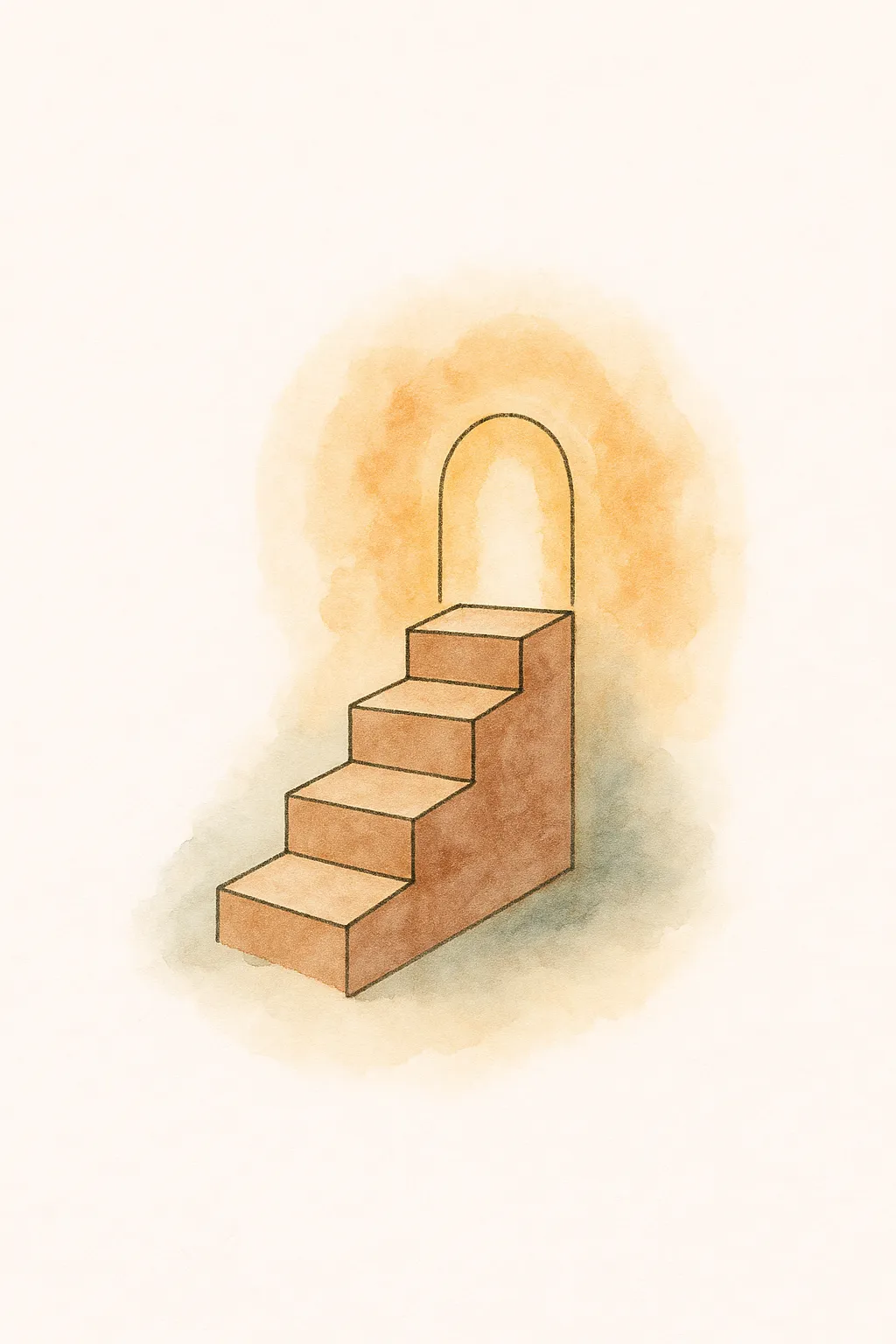
Watercolor illustration of ascending stairs with a warm glow at the top

Practice makes the difference

You just read about the skill. Now put it to work — practice real scenarios, get feedback, and build the confidence that comes from repetition.

Build Reps

Free · Private · No credit card

Built for anyone practicing real-world dating skills.

Social Skills

Here's a fact that surprises a lot of people: social skills and dating skills are the same skills. The person who can navigate a networking event, make small talk with strangers, and build rapport with colleagues has already developed 80% of the skills they need for dating. The remaining 20% is just applying those skills with romantic intent.

We cover the core social skills that transfer directly to dating contexts: active listening (responding to what was said, not to what you were planning to say next), conversational reciprocity (trading questions and statements in a natural rhythm), reading non-verbal cues (noticing body orientation, eye contact, physical proximity), and managing your own non-verbal communication (posture, gesture, the pace of your speech). None of these are innate talents. They're all observable, practicable, improvable skills.

The crossover implication is freeing: you don't have to wait for dating opportunities to practice. Every conversation at work, every small talk at a coffee shop, every chat with a stranger at a party is reps for the same muscle. The total volume of interactions you can practice in a week is much higher than "dates per month" suggests.

One effective strategy is to practice these skills in various settings, adjusting your approach based on the environment and participants. This adaptability not only refines your skills but also builds a robust foundation for your dating interactions. Explore our guide on how to be more confident for more techniques on enhancing your social and dating skills.

Cross-Cutting Principles

Three anchors run under everything in this section. Lose sight of any of them and the Confidence Loop stalls.

Competence precedes confidence

You will never think your way into confidence. You'll act your way into it. Every technique in this section starts with doing something, not feeling something. The feeling follows the action, not the other way around. If you're waiting until you feel confident to start practicing, you've got the sequence backwards. Confidence is the reward for practice, not the prerequisite.

This principle is critical in scenarios where you face new social challenges. By committing to action without overthinking, you allow yourself to gather real-world feedback, which in turn fosters genuine confidence. Consider trying new social environments as opportunities to apply this principle.

Compare to your past self, not to others

Comparing your social skills to someone who's been building them for decades is as useful as comparing your first piano lesson to a concert performance. The only comparison that matters is whether you're better than you were last month. Track your own progression. Other people's confidence is their loop — it has nothing to do with yours. The moment you start measuring yourself against them, you're no longer practicing; you're performing.

Embrace the journey of self-improvement by keeping a journal or log of your progress. Documenting your experiences and reflections can provide tangible evidence of your growth over time, reinforcing your commitment to continuous improvement.

Volume beats intensity

Ten short, low-stakes practice interactions in a week do more for your confidence than one intense, high-stakes attempt. Most people have the ratio inverted — they avoid low-stakes reps and then pour all their anxiety into a single high-stakes moment. Reverse it. Do a lot of small things. The big thing becomes trivial by the time you get to it.

Incorporating frequent, varied interactions into your routine can significantly boost your confidence levels. The cumulative effect of these low-pressure situations prepares you for more significant challenges, ensuring that when they arise, they feel manageable and even routine.

Reading is great. Practicing is better.

Dating Coach is where you turn knowledge into skill.

Start Practicing — Free

Questions

Can you build confidence if you've always been shy?

Shyness and confidence aren't opposites. Shyness is a temperamental tendency — your initial reaction to new situations. Confidence is a skill state — your competence level. Plenty of shy people have built strong confidence through practice. You might always feel initial hesitation, but confidence means you act despite it.

How do confident people handle rejection?

Faster. That's the main difference. They still feel the sting — they've just processed enough rejections that their recovery time is shorter. They've learned to separate the event from their identity. This isn't bravery; it's pattern recognition built through experience.

Does fake-it-till-you-make-it work?

Partially. Acting confident can produce real confidence over time — but only if it leads to genuine skill practice. If you fake confidence to avoid real interactions, it backfires. The key is that 'faking it' has to lead to real reps, not replace them.

Why do I feel confident with friends but not on dates?

Because you've had thousands of hours of practice with friends and very few in dating contexts. Confidence is context-specific. The skills transfer, but the emotional context changes when stakes feel higher. The solution is accumulating experience specifically in dating-adjacent situations.

What's the fastest way to build dating confidence?

Graduated exposure with intentional reflection. Start with low-stakes social interactions and work up. After each one, notice what went well — not just what went wrong. The Confidence Loop accelerates when you're deliberate about registering small wins.