You spot them across the room — at the coffee shop, at the bookstore, at a friend's party — and there's a moment. A real, physical moment where the window is right there. They're not deep in conversation. They glanced over. The situation is natural. And then, in about three seconds, your brain slams the door shut and you spend the next twenty minutes replaying what you could have said.
That's not shyness. That's not a personality flaw. Nobody teaches you how to read that window, step through it, and say something — so most people just stand there while it closes. The result feels like failure, but it's really just an untrained skill.
The thing you're actually trying to figure out isn't "what's the perfect line?" It's how to recognize that window when it opens and move before it shuts. That's what this article is about — and once you understand the mechanics, the whole thing gets a lot calmer.
Why does your brain freeze the moment you want to talk to someone you like?
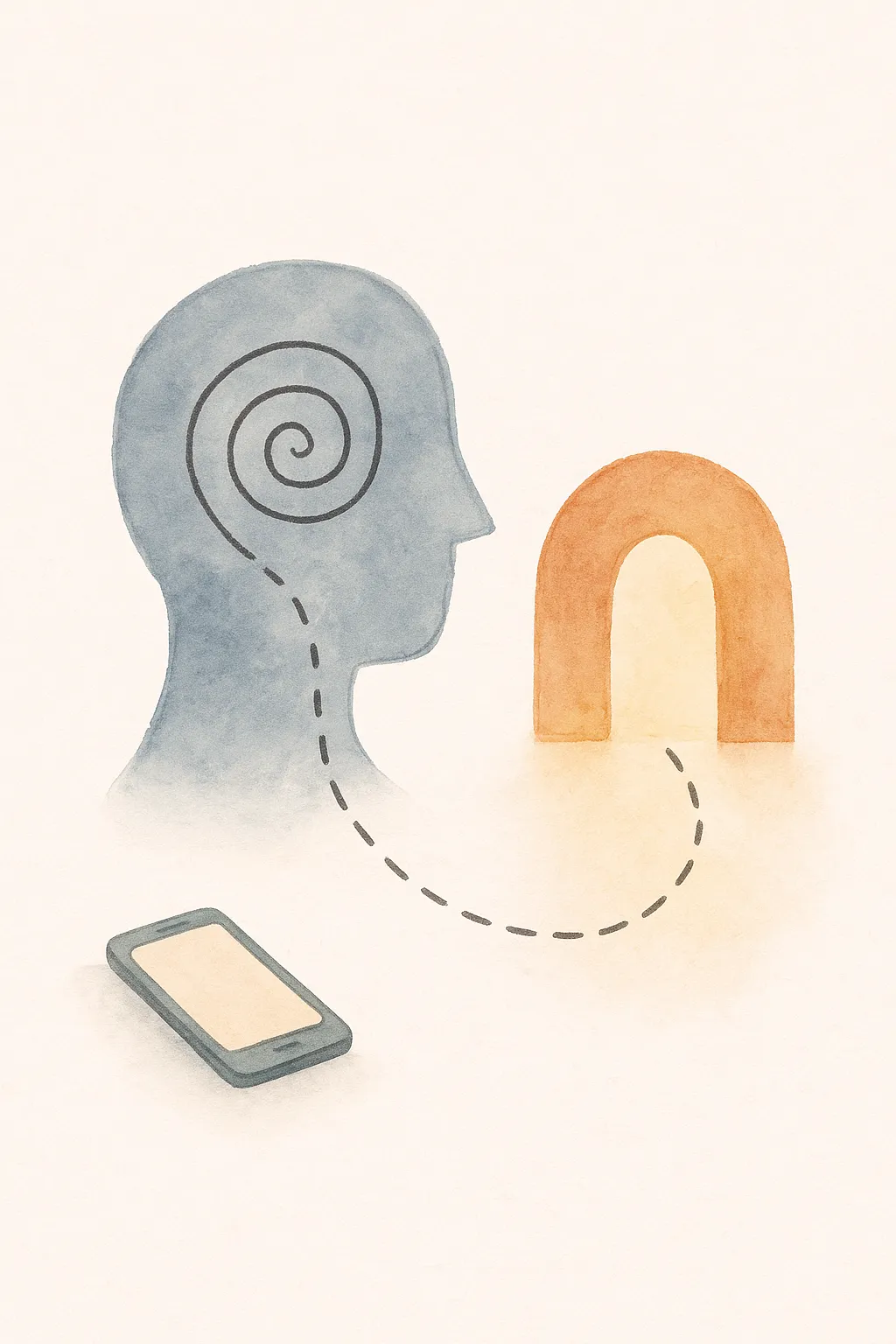
Your brain freezes because it has misclassified the situation as a threat. The same system that would protect you from a predator is now firing because you want to say hi to someone attractive. Neurologically, social rejection and physical danger share overlapping pathways — so the freeze response is automatic, fast, and completely disproportionate to the actual risk.

This is hard not because something is wrong with you, but because the brain's threat-detection system is ancient and blunt. It doesn't distinguish between "a bear is chasing me" and "I might say something awkward." A lot of people assume this freeze means they're not confident enough to approach — but confidence isn't what comes first. Action is. If you want to understand the deeper wiring behind this, why you're scared of rejection breaks down exactly why the brain treats social risk like physical danger.
The freeze also feeds on time. The longer you stand there thinking, the more your brain generates objections — they look busy, they probably have a partner, what if it's weird — and each objection feels like a logical reason not to act. It isn't. It's your threat system buying time. The solution isn't to argue with the objections. It's to move before they stack up.
Here's a concrete example: you're in line at a coffee shop and the person in front of you is wearing a shirt from a band you love. The window is open. Five seconds later, you've thought "that's too random to comment on" and the window is closed. The shirt was a perfect, low-pressure opener. The problem wasn't the situation — it was the delay.
What is the Approach Window and how does it tell you when to speak?
The Approach Window is the brief stretch of time — usually three seconds or less — when approaching someone feels natural, the social context supports it, and the moment hasn't gone stale. Once it closes, the same action that would have felt easy now feels forced, and both you and the other person can feel the difference.
The window opens on cues: eye contact, a shared laugh at something nearby, a natural pause in their activity, a comment-worthy detail in the environment. These aren't rare — they happen constantly. The problem is that most people don't recognize them as invitations because they're waiting for a bigger, more obvious green light that almost never comes. Learning to overcome approach anxiety starts with recognizing these micro-moments for what they are.
Three seconds sounds impossibly short, but it's actually a well-documented pattern in social psychology. The hesitation that follows those three seconds isn't neutral — your body language shifts, you start to look like you're deliberating, and the natural quality of the moment evaporates. Acting within the window doesn't mean rushing. It means not waiting for certainty that will never arrive.
Think of it like catching a wave. You don't wait until you're completely sure — you commit when the timing is right and adjust as you go. The wave doesn't hold still while you deliberate. Neither does the window.
How do you start a conversation using situational openers instead of rehearsed lines?
Rehearsed lines fail because they're disconnected from the moment. The other person can feel the seam between the line and reality — it creates a slight uncanny valley effect where something seems off even if they can't name it. Situational openers work because they're true. They're rooted in what's actually happening, which makes them effortless to deliver and easy for the other person to respond to.
A situational opener is just an honest observation or question about the shared context. You're both waiting for the same delayed train — "this one's really testing my patience" is an opener. They're reading a book you've heard of — "is that as good as everyone says?" is an opener. The bar is low. You're not trying to be witty. You're just acknowledging that you're both in the same place at the same time, which is already true. If you want to think through how to do this without it feeling clunky, how to approach someone without being awkward covers the mechanics in detail.
Before you read on — what would YOU say to someone standing next to you at a coffee shop, staring at the menu like they can't decide?
Take 10 seconds. Then compare with the example below.
The goal of the opener isn't to be impressive. It's to create a small bridge. Once the conversation is moving, you can learn more about them, find a real thread, and let things develop naturally. If you're working on how to approach someone you like in different settings, the core principle is the same: stay situational, stay honest, stay brief.
This is a window-spotting drill — the same kind of scenario the Practice mode in Dating Coach is built for. Do it in the next 48 hours.
- Pick one place you'll be around people — a coffee shop, gym, grocery store, campus — and go with the specific intention of noticing Approach Windows. You don't have to act on them yet. Just notice when one opens and when it closes.
- When you spot a window, mentally note what opened it — eye contact, a shared moment, a comment-worthy detail — and count how long it stays open before the moment passes.
- On the third window you spot, step through it. One sentence. Anything situational. The content matters less than the act of moving within three seconds.

What mistakes kill the conversation in the first 30 seconds — and how do you avoid them?
The biggest mistake isn't saying the wrong thing. It's over-investing in the outcome before the conversation has earned it. When you walk up already hoping they'll be your next relationship, that energy comes through — in the speed of your speech, in how you react to their first response, in whether you can handle a neutral reply without deflating. The first 30 seconds should feel like a low-stakes exchange, because that's exactly what they are.
The second mistake is asking a question and then not listening to the answer. You're so focused on what to say next that you miss what they actually said — and then you ask a follow-up that doesn't track, which kills the natural flow. The fix is simple: let their answer be the next topic. If they mention they're visiting from another city, that's your next question. You don't need a script when you're actually paying attention.
A third mistake is staying too long in opener mode — hovering near the subject of how you met or why you started talking. Move past it within two exchanges. If you're both still talking about the coffee menu two minutes in, you've stalled. Transition to something real: where they're headed, what they're working on, something they mentioned in passing. Keeping a conversation going after the opener is its own skill, but it starts with being willing to leave the opener behind.
One more thing: don't perform confidence. Standing there with a rigid grin trying to look relaxed reads as tense. Actual ease comes from caring less about how you're landing and more about what they're saying. Shift your attention outward and a lot of the internal noise quiets down. This is especially worth remembering when you're figuring out how to talk to your crush — the stakes feel higher, which makes the performance instinct stronger, but the same principle applies. If you want a broader framework for building this skill across different situations, how to improve at talking to people you like is a good place to go deeper.
How do you know if the first conversation went well enough to keep going?
Most people try to evaluate this by whether the other person seemed really into them — big smiles, lots of laughing, extended eye contact. Those are nice signs, but they're not the only ones that matter. A more reliable signal is whether the conversation had any forward momentum: did they ask you anything back, did they add detail to their answers, did they stay in the conversation when they could have reasonably exited?
A conversation where they answered your questions politely but asked nothing back is a different outcome than one where they matched your energy and kept the thread alive. You're not looking for fireworks in the first two minutes. You're looking for reciprocity — some sign that they were engaged, not just being polite. Learning to tell if someone likes you in these early moments is mostly about reading engagement, not enthusiasm.
If the conversation ends naturally and you want to continue it, that's your window to ask for their number or suggest something specific. Keep it simple and direct — "I'd like to keep talking, want to grab coffee sometime?" works better than a long setup. If you're not sure how to make that transition, asking someone out without it being awkward covers exactly that moment.
And if it didn't go well? That's data, not a verdict. Some conversations don't click — the timing was off, they were distracted, the chemistry wasn't there. None of that tells you anything about the next window. If rejection stings more than it should, bouncing back from rejection is worth reading before your next attempt — not because you'll definitely get rejected, but because knowing you can handle it makes stepping through the window a lot easier.
The first conversation is one data point. That's it. The goal isn't to nail it — it's to get enough reps that stepping through the window stops feeling like a leap and starts feeling like a step.
What changes when you practice this isn't that you become fearless. It's that the window starts to feel familiar — you recognize it, you know what to do with it, and the three-second gap between spotting it and acting shrinks until it's almost nothing. The moment that used to feel like a performance to nail becomes something much simpler: a small door you know how to open. That's the whole skill. And like any skill, it gets easier every time you use it.