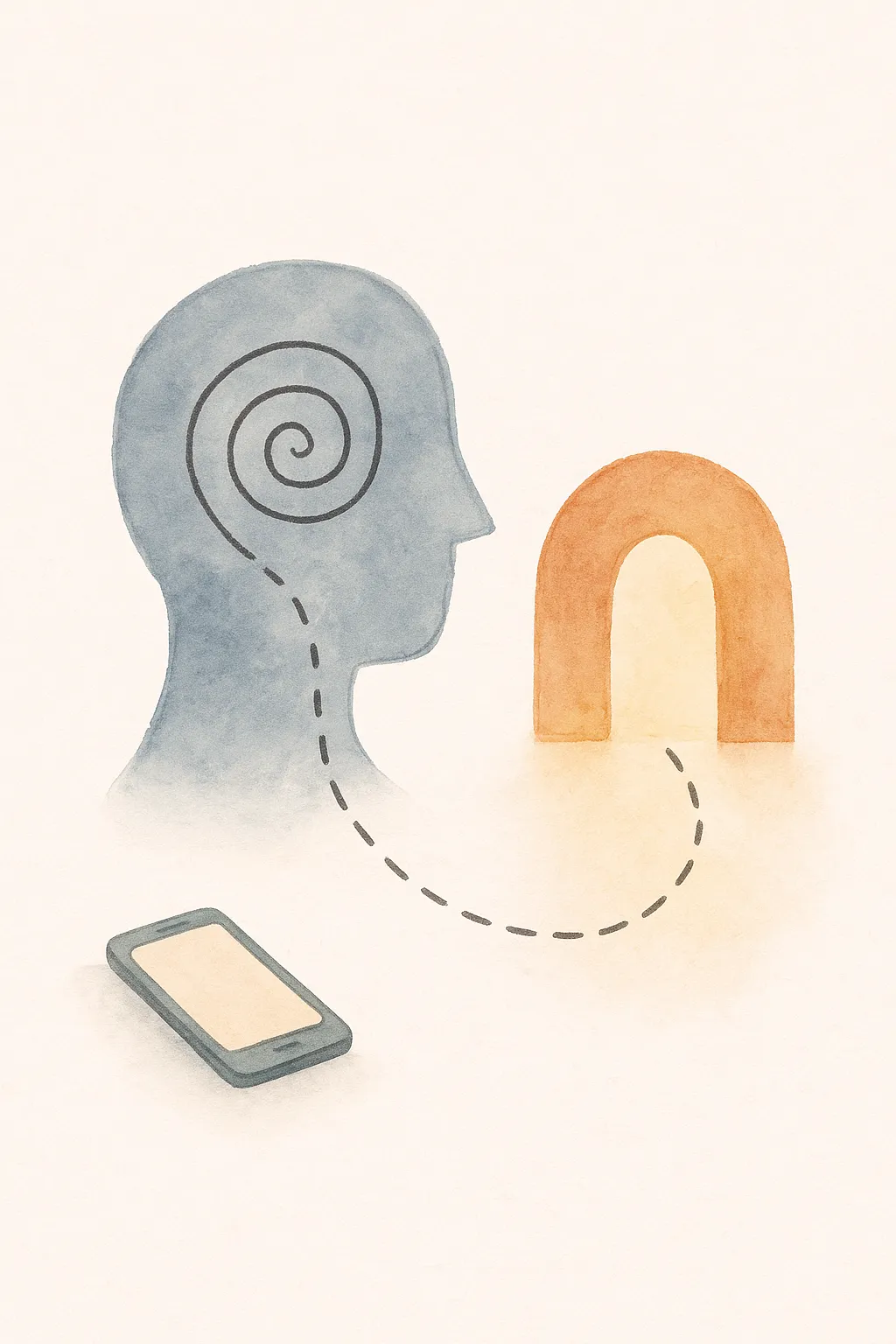
You spot them across the room. Something clicks — you want to go over. You know you should just walk up and say something. You even have a line ready. And then you stand there, watching the moment evaporate, telling yourself you'll do it next time.
Here's what's actually happening: the awkwardness isn't coming from you as a person. It's coming from a timing problem. You're stepping into the moment a beat too late, or with energy that doesn't match the situation — and the mismatch is what reads as awkward, not you. This is a fixable mechanical issue, not a personality flaw.
So the real question isn't "how do I become someone who isn't awkward?" It's "how do I learn to step into the moment correctly?" That's a skill. And like any skill, it has specific things that make it work — and specific things that break it. Here's what actually matters.
The first thing to understand is The Approach Window. Every social moment has a natural opening — a few seconds where walking over feels easy and organic. Wait longer than about three seconds after you've noticed someone, and your brain starts generating reasons not to go. The window doesn't just close; it locks. Acting before that happens isn't impulsive — it's skilled. Most of overcoming approach anxiety comes down to recognizing this window exists and training yourself to move before the lock clicks.
Why Does Approaching Someone Feel Awkward Even When You Know What to Say?
Awkwardness in an approach is almost never about the words. It's about the gap between when you decided to go and when you actually moved. That delay creates a visible tension — your body language shifts, your energy becomes self-conscious, and the other person picks up on it before you've said a single word.
Nobody teaches this stuff. You don't get a class in how to enter a social moment cleanly, how to read whether someone is open to conversation, or how to carry yourself when you walk over. So the discomfort you feel isn't a sign that something is wrong with you — it's a sign that you're attempting a skill without having been shown how it works. That's a completely different problem, and a much more solvable one.
The other piece is what psychologists call anticipatory anxiety — your brain rehearsing worst-case scenarios before anything has even happened. A large share of daters report that the fear before an approach is significantly worse than any actual outcome. You're not nervous because approaching is dangerous. You're nervous because your brain is treating social rejection like a physical threat, which is a wiring issue, not a character issue. Understanding why rejection feels so threatening helps you stop taking the anxiety as a signal to retreat.
The concrete example: someone at a coffee shop is reading a book you recognize. You think about saying something. Ten seconds pass. Now you've been standing nearby for ten seconds, which feels weird, so you don't go. The awkwardness wasn't in the approach — it was in the delay. If you'd moved at second two, it would have felt completely natural.
What Actually Makes an Approach Feel Natural Instead of Forced?
Natural approaches share one quality: they feel like a continuation of the environment, not an interruption of it. You're not parachuting in from nowhere — you're responding to something that's actually happening. That's the warmth piece. The approach lands well when the other person can immediately see why you walked over.
Body language does more work than your opener. Walking over with relaxed shoulders, a slight smile, and a comfortable pace signals that you're not in crisis mode. Compare that to the stiff, over-deliberate walk of someone who's been psyching themselves up for two minutes — that energy arrives before you do. Building real confidence in dating means practicing the physical delivery, not just the lines.
Warmth is the other variable. Not performed warmth — actual interest. When you approach because you're genuinely curious about someone, that reads completely differently than when you approach because you feel like you should. The former is engaging; the latter feels like a job interview. If you can't find something you're actually curious about, that's a signal to wait for a better window rather than forcing one. Once you've made a clean approach, knowing how to flirt in person is what turns that initial connection into something more.
Here's what a natural opener looks like in practice. You're at a bookstore and someone is holding a novel you've read:
How Do You Open a Conversation Without Overthinking the First Line?
The first line is not the thing. Seriously. Research on first impressions consistently shows that tone and energy account for far more than content in those opening seconds. A warm, relaxed "hey, random question —" lands better than a perfectly crafted line delivered with nervous energy. Stop optimizing the words and start optimizing the delivery.
The easiest openers are observational — they're about something in the shared environment. This works because it's low-stakes and obviously situational, which means the other person doesn't feel singled out in a weird way. You're just two people noticing the same thing. That's how most good conversations actually start. The same principle applies whether you're at a coffee shop or approaching someone at a bar — the environment gives you the material; you just have to use it.
Before you read on — what would YOU say if you walked up to someone at a mutual friend's party who was standing near the snack table looking a little bored?
Take 10 seconds. Then compare with the example below.
This is exactly the kind of scenario the practice mode in Dating Coach is built for — running through real situations so the opener feels automatic by the time you actually need it. Starting a conversation with someone you like gets easier the more you've rehearsed the rhythm, not the specific words.
The Approach Window applies here too. When you feel the urge to approach, that's your window. Don't use those three seconds to perfect your opener — use them to move. The words will come. They always do, once you're actually in the conversation.
Identify one upcoming situation this week where an approach window is likely to open — a class, a coffee shop, a social event — and commit to entering it within three seconds of feeling the impulse.
- Write down the specific situation and when it's happening (e.g., "Thursday morning at the gym, before the 8am class").
- Prepare one observational opener tied to that environment — something you'd genuinely notice in that setting.
- When the window opens, move before you think. Debrief afterward: what happened, and what felt different about acting quickly?

What Mistakes Turn a Warm Opener Into an Uncomfortable Moment?
The most common one: not giving the other person an exit. When an approach feels cornering — when the person can't easily wrap up the conversation if they want to — the whole dynamic shifts. You can defuse this instantly by keeping your opener light and leaving space. A question that requires a one-word answer is fine. You're not trying to trap them into a conversation; you're opening a door and seeing if they walk through it.
Over-explaining is another one. If you find yourself justifying why you came over ("I know this is random, and you're probably busy, and I almost didn't say anything, but..."), you're putting your anxiety on them. They now have to manage your nerves on top of responding to you. Keep it clean. Say the thing. Getting out of your head is what makes the difference between an opener that lands and one that lands with a thud.
Misreading the window is a subtler mistake. Approaching someone who has headphones in and is clearly focused, or interrupting an intense conversation between two people, isn't a timing problem — it's a context problem. Part of learning how to approach someone you like is reading whether the moment is actually open. Closed body language, no eye contact, and active engagement elsewhere are signals to wait for a better window, not push through anyway.
Finally: staying too long after the opener. A lot of people approach well and then blow it by not knowing when to move on. If the conversation has run its natural course after two minutes, wrapping it up gracefully — "I'll let you get back to it, but it was good talking to you" — leaves a better impression than grinding through awkward silence trying to extend things. Knowing when the scene is over is just as much a part of the skill as knowing how to open it.
How Do You Know If the Approach Landed Well Enough to Keep Going?
The clearest signal is whether they're contributing to the conversation or just responding to it. If they're asking you questions back, adding details you didn't ask for, or turning their body toward you, the approach landed. If they're giving short answers and their eyes are drifting, that's useful information too — and it's not a catastrophe.
Eye contact is a reliable early signal. Sustained, comfortable eye contact after your opener means they're engaged. Broken eye contact that keeps going elsewhere usually means they're looking for an out. Neither of these is a judgment on you as a person — it's just data about whether this particular window was the right one. Reading the signs that someone is interested gets easier once you're looking at behavior patterns rather than trying to mind-read.
Laughter — even small laughter — is a strong green light. It signals comfort, which is what you're actually going for in an approach. You're not trying to impress them in the first thirty seconds; you're trying to make them feel at ease. If they're smiling and leaning in slightly, you've done the job. From here, keeping the conversation going is a separate skill, but you've cleared the hardest part.
If the approach didn't land — if they were polite but clearly not interested — that's worth noting without catastrophizing. The question to ask yourself isn't "what's wrong with me?" but "was the window actually open, and did I enter it cleanly?" Sometimes the answer is that the window was closed before you got there. Sometimes you entered it well and they're just not interested. Both outcomes are fine, and both teach you something useful about reading the room next time.
Awkwardness is a timing and warmth problem. That's the reframe that actually changes things. When an approach feels off, it's almost never because you're an awkward person — it's because you hesitated too long, or your energy didn't match the moment, or the window was already closing when you stepped in. Those are all correctable. They're mechanics, not character traits.
The shift that happens when you practice this is subtle but real. You stop dreading the approach and start reading the room instead — looking for open windows, moving when you feel the impulse, adjusting based on what you observe rather than what you fear. That's not confidence as a personality trait. That's confidence as a practiced skill. And it compounds. Every clean approach — whether it goes anywhere or not — makes the next one easier to enter.