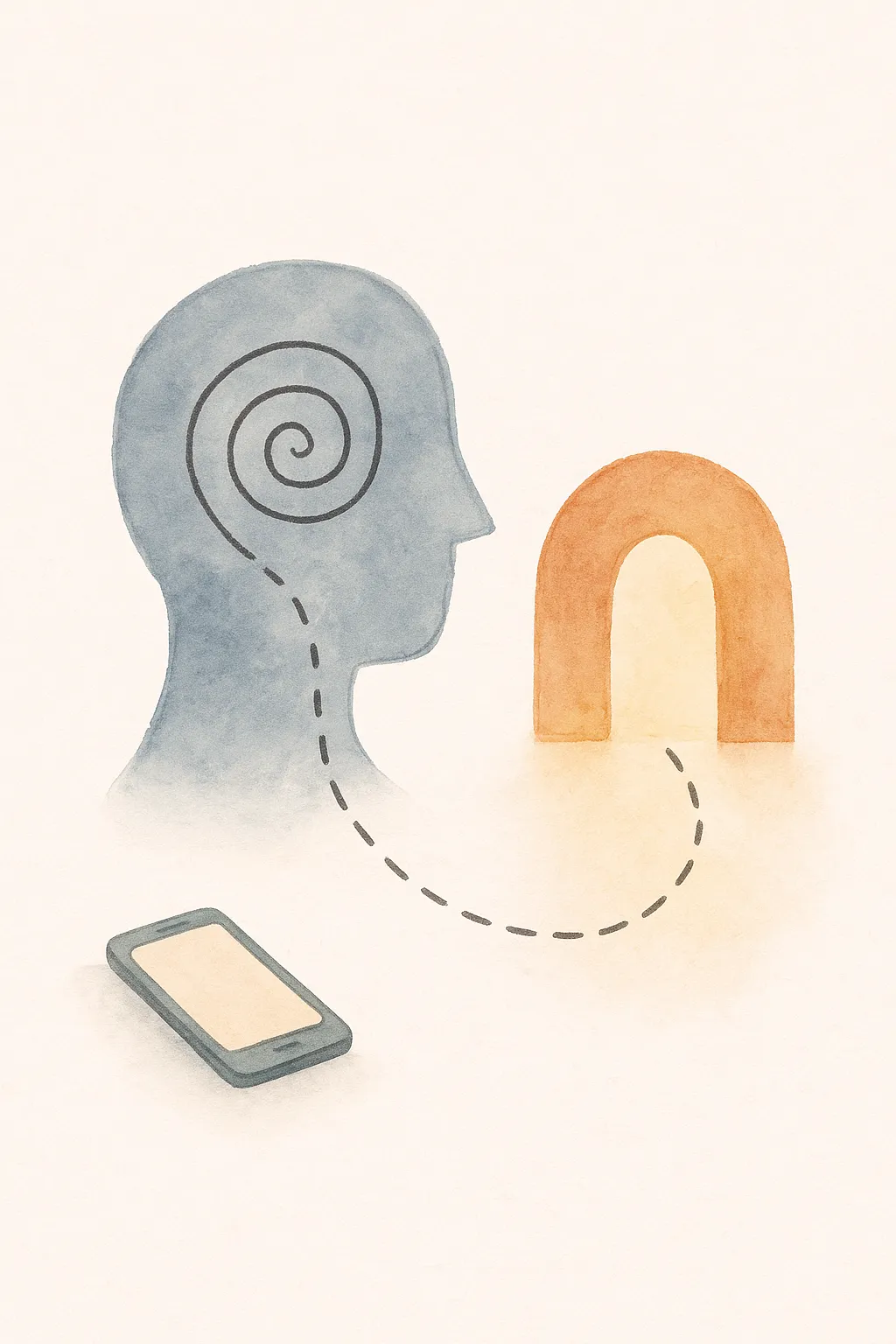
You're mid-conversation with someone you find genuinely interesting. You're saying reasonable things. You're not being weird. But something isn't clicking — they're polite, not pulled in. You walk away thinking, "I just don't have that thing." That magnetic, effortless quality some people seem to carry around like a spare jacket.
Here's what's actually happening: you're confusing a state for a trait. Charisma isn't something people have — it's something they're doing, usually without realizing it. And that distinction matters more than anything else in this article, because it means the gap between you and the most magnetic person in the room isn't personality. It's practice.
The question worth asking isn't "am I charismatic?" It's "what specifically creates those moments where someone lights up a room — and how do I learn to do that?" That's what we're going to break down here, step by step.
Before we get into mechanics, it helps to understand how confidence actually works. Most people assume you need confidence before you can be charismatic. But that's backwards. The Confidence Loop runs in the opposite direction: you build a skill, you practice it, you get a small win, and then confidence shows up as the result — not the prerequisite. Charisma is no different. You don't wait to feel magnetic before you practice presence. You practice presence until it starts feeling natural, and the confidence follows.
Why Does Charisma Feel Like a Fixed Trait You Either Have or Don't?
Charisma feels fixed because the people who have it make it look automatic — you see the finished product, never the reps. Nobody teaches this in school, and most people never get honest feedback on how they come across, so the skill stays invisible and gets misread as personality.

The research backs this up. Studies on social perception consistently show that observers attribute confident, warm behavior to personality rather than effort — even when the behavior is deliberately practiced. Which means the person you're watching probably worked on this. You just didn't see the awkward phase.
A lot of people also carry a specific story: "I'm just introverted" or "I'm not naturally funny." These aren't lies — they're just incomplete. Introversion affects how you recharge, not whether you can be compelling in a conversation. Plenty of introverts are extraordinarily charismatic in one-on-one settings, which is exactly where dating happens. The label becomes a ceiling only when you treat it like one.
The shift that actually changes things is moving from "do I have charisma?" to "what's one specific thing I can do differently in the next conversation?" That's the entry point into the skill. And building confidence in dating works the same way — it's always one concrete behavior at a time, not a personality overhaul.
How Do Presence, Warmth, and Energy Actually Combine to Create Charismatic Moments?
Charisma in a conversation is almost always the product of three things overlapping at once: presence (you're genuinely here, not half in your head), warmth (the other person feels like you actually like them), and energy (you're bringing something — curiosity, humor, aliveness — not just responding). When all three are running simultaneously, people describe you as magnetic. When one drops out, the effect collapses.
Presence is the hardest one to fake, which is why it's the most valuable. It means your attention is fully on this person, not on how you're coming across or what you're going to say next. Ironically, the moment you stop monitoring yourself and start genuinely listening, you become more interesting to talk to. People feel attended to, and that feeling is rare enough that it registers as charisma.
Warmth is subtler than most people think. It's not about being enthusiastic or complimentary — it's about making someone feel like their presence is a good thing. A small lean forward. Actually laughing when something is funny instead of performing a polite smile. Remembering a detail they mentioned two minutes ago and circling back to it. These micro-signals tell the other person: I'm glad you're here. Understanding how to be more likeable in dating comes down to exactly these small, consistent warmth signals — not grand gestures.
Energy is where people either over-correct or underdeliver. Over-correction looks like being "on" the whole time — performing, filling silence, trying too hard. Underdelivery looks like flat affect, short answers, waiting for the other person to carry everything. The sweet spot is engaged curiosity: you're interested, you're showing it, but you're not auditioning. If you want to work on never running out of things to say, presence is actually the fix — you stop generating topics from your head and start pulling them from what the other person just said.
How Can You Practice Charisma as a Repeatable Skill in Real Conversations?
This is where the Confidence Loop becomes practical. Charisma isn't a vibe you summon — it's a collection of micro-skills, each of which you can isolate and drill. Pick one per week. Presence. Eye contact that doesn't feel aggressive. The follow-up question that shows you were listening. A well-timed pause instead of filling silence. Each small win builds the loop: skill, practice, win, confidence.
One of the most effective drills is what you could call the "one layer deeper" habit. Most conversations stay on the surface because both people answer questions and move on. The charismatic move is to take whatever the other person just said and go one layer deeper — ask about the feeling behind it, the story behind it, or the thing they almost didn't say. This is exactly the kind of scenario the Practice mode in Dating Coach is built for: low-stakes repetitions of a specific conversational move until it stops feeling deliberate.
Before you read on — what would YOU write here?
Someone you're on a date with says: "I almost didn't come tonight, honestly." Take 10 seconds and draft a reply that goes one layer deeper. Then compare with the example below.
Another drill: practice the "name and move" technique for awkward silences. Instead of panicking and filling the gap with noise, name it lightly — "we've hit a silence" — and then ask something you're actually curious about. It takes the pressure off both people and, weirdly, creates intimacy. Naming the thing that everyone notices but nobody says is a classic presence move. It also works brilliantly if you're trying to handle awkward silences on a date without it feeling forced.
Pick one component of the Confidence Loop to work on in your next real conversation this week.
- Choose one micro-skill: presence (no phone, full attention), warmth (one genuine follow-up on something they said), or energy (ask one question you're actually curious about, not just polite).
- Before the conversation, say the skill out loud to yourself: "Tonight I'm practicing [X]." Naming it primes your brain to notice when you're doing it and when you're not.
- After the conversation, score yourself 1-10 on that one skill only. Ignore everything else. Repeat next week with the same skill or a new one.
What Are the Habits That Quietly Drain Your Charisma Before You Even Open Your Mouth?
Most charisma leaks happen before you say a word. The biggest one is self-monitoring in real time — running a commentary in your head about how you're coming across while simultaneously trying to have a conversation. You can't do both. The mental bandwidth required to assess yourself leaves nothing for genuine engagement, and people can feel the difference even if they can't name it.
Seeking validation mid-conversation is a close second. This shows up as watching for reactions, adjusting what you say based on whether they seem impressed, or softening opinions the moment you sense disagreement. It's understandable — most people want to be liked — but it reads as low-status and slightly anxious. The fix isn't to stop caring what they think. It's to stop making their approval the goal of the conversation. The goal is connection, which is different.
Physical habits matter more than people expect. Hunched posture, crossed arms, a tight jaw — these don't just signal low confidence to others, they actually feed the state back to you. The body-mind loop runs both directions. Slow your breathing before you walk in. Take up slightly more space than feels natural. Not as a performance, but as a way of telling your nervous system: we're okay here. Managing first-date nerves is partly about managing this physical baseline before the conversation even starts.
The last drain is trying to be impressive instead of interested. Charismatic people are remembered as fascinating conversationalists — but if you study what they actually did, they usually asked more than they told. They were interested. Being interested is a skill you can practice anywhere, including in conversations you don't care about that much. The reps count regardless of the stakes. This connects directly to stopping people-pleasing in dating — both habits stem from the same root: optimizing for approval instead of genuine connection.
How Do You Know When Your Charisma Is Landing — and What to Adjust If It Isn't?
The clearest signal is whether the other person starts volunteering information you didn't ask for. When someone tells you something they didn't have to share — a slightly vulnerable detail, a story that goes longer than the question required — that's a sign they feel safe and engaged. You're landing. The reverse is also true: if every answer is exactly as long as your question required and no more, something isn't connecting.
Watch for mirroring. When someone unconsciously matches your pace, posture, or energy level, it means they're tracking you closely — a biological signal of rapport. If you slow down and they slow down, if you lean in and they lean in, the connection is working. This is also a useful tool in reverse: if the conversation feels flat, try subtly shifting your energy up or down and see if they follow. Reading body language on a date gives you a real-time feedback loop most people ignore entirely.
If it isn't landing, the most common culprits are: you're talking too much (energy without presence), you're too flat (presence without energy), or you're being generically nice instead of specifically interested (warmth without substance). Identify which one is off and adjust that single variable. Don't overhaul everything at once — you'll lose track of what actually worked.
One more thing worth knowing: charisma doesn't always land immediately. Some conversations take ten minutes to warm up. If you bail mentally after two flat exchanges, you're not giving the skill a fair test. Getting conversation to flow naturally often requires patience with the warm-up phase — staying present even when it's a little awkward, instead of retreating into your head.
Charisma was never a personality type. It's a state — one that some people have stumbled into more reliably than others, usually through a combination of experience and environments that rewarded it. What that means for you is that there's no fixed gap between who you are now and who you're capable of being in a room. There's just a set of specific skills, and a number of reps you haven't done yet.
The reframe that matters here isn't "I need to become a different person." It's "I need to practice being more present, more curious, and less focused on how I'm coming across — and do that enough times that it stops requiring effort." That's the whole thing. The Confidence Loop closes when the wins start accumulating: one conversation where you stayed present, one exchange where the other person leaned in, one moment where you felt the difference between performing and actually connecting.
When you practice this consistently, something shifts. You stop walking into rooms hoping to be liked and start walking in genuinely curious about who's there. That shift — from seeking approval to offering presence — is what people actually mean when they call someone magnetic. And it's entirely learnable.