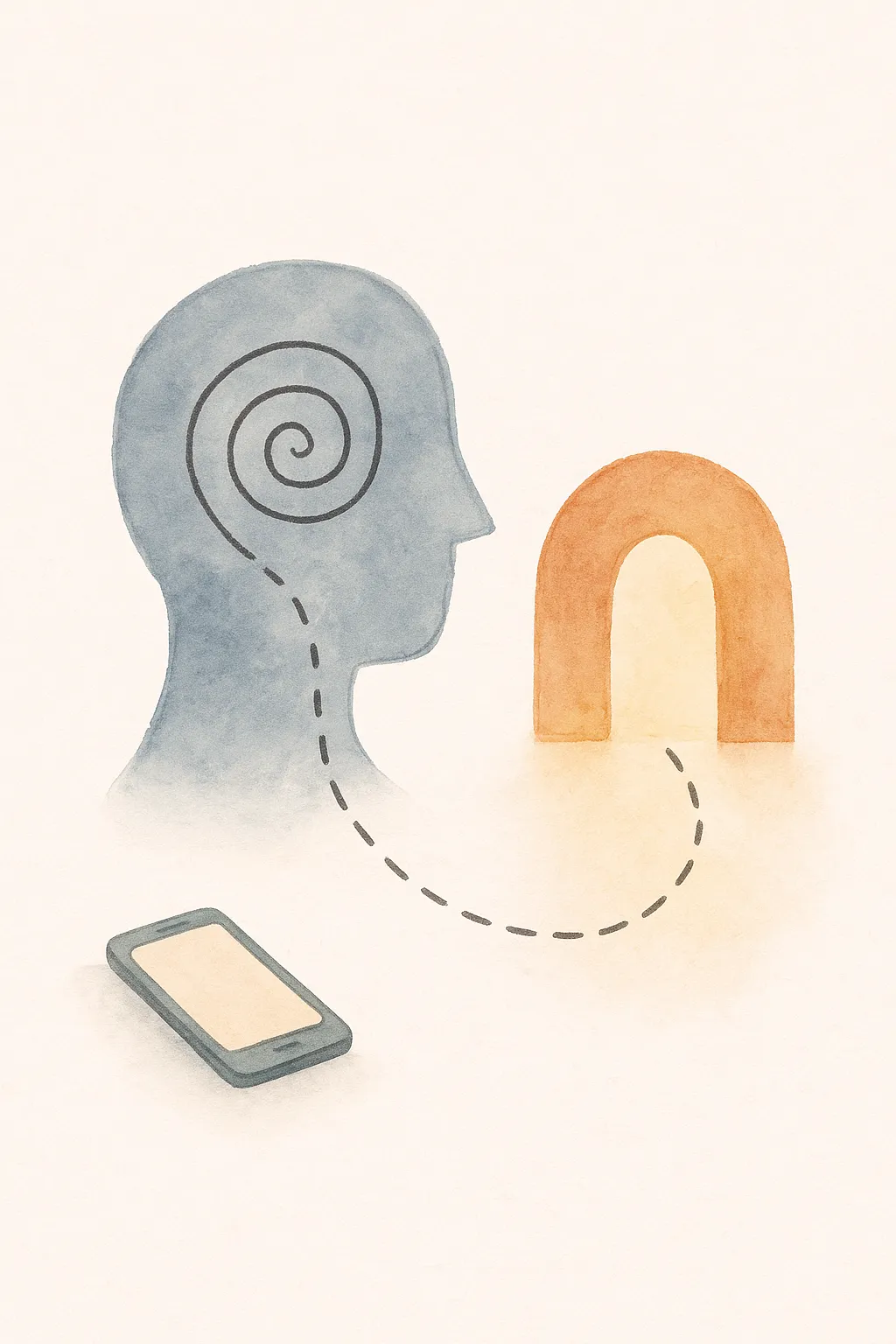
You leave a date thinking it went well. The conversation flowed, you made them laugh, they seemed engaged. Then the texts slow down, the follow-up never comes, and you're left wondering what invisible thing you did — or didn't do — that made the difference. The frustrating part isn't the outcome. It's that you can't identify the variable.
Most people assume likeability is something you either radiate or you don't. That some people are just naturally magnetic, warm, easy to be around — and if you're not getting that response, it means something is fundamentally off about you. That framing is both wrong and genuinely unhelpful, because it turns a set of learnable micro-signals into a verdict on your personality.
The real question isn't "am I likeable?" It's "which specific signals am I sending, and which ones can I sharpen?" That's a much more answerable question — and this article is going to answer it.
Why Does Likeability Feel Like a Mystery When You're Trying to Date?
Likeability feels mysterious in dating because it's made up of dozens of tiny behaviors that happen simultaneously — eye contact, timing, tone, word choice, body language — and nobody ever broke them down for you. You weren't taught this in school. Most people learned by osmosis, which means they absorbed some things and missed others entirely, with no way to know which.
That's the core problem with how most people approach building confidence in dating. They focus on the feeling — "I need to be more confident, more relaxed, more charming" — without ever identifying the specific behaviors those feelings are supposed to produce. Confidence isn't the starting point. It's what you get after you build a skill, practice it, and rack up small wins. That's the Confidence Loop in action: Skill → Practice → Win → Confidence. Confidence is the output of the loop, not the fuel you need to enter it.
A lot of people also conflate likeability with performance. They try harder — more jokes, more questions, more energy — and it backfires, because effort without direction reads as anxiety. The person across from you can't name what feels off, but they feel it. That's why dating feels so hard even when you're genuinely trying.
The fix isn't to try less or try more. It's to practice the right things deliberately, the same way you'd work on a backhand or a presentation skill. Specific, repeatable, improvable.
What Does Likeability Science Actually Say About Why Some People Draw Others In?
Decades of social psychology research point to a few consistent patterns. People rate others as more likeable when they feel genuinely heard, when they sense warmth without neediness, and when the interaction contains small moments of shared humor or mild surprise. None of those things require a charismatic personality. They require specific behaviors executed at the right moments.
One of the most replicated findings is the "pratfall effect" — people who show a small, relatable imperfection are rated as more likeable than those who seem flawless. Admitting you mispronounced a restaurant name, or that you got slightly lost on the way, doesn't make you look bad. It makes you look human. Humans like humans. The person trying to appear perfectly composed often comes across as closed off.
Active listening is another one. Research consistently shows that people leave conversations rating their partner as more interesting and engaging when that partner asked follow-up questions rather than pivoting to their own stories. The irony is that asking about them makes them think you're fascinating. If you want to know how to have better conversations in dating, this is probably the single highest-leverage skill to develop first.
Mirroring — subtly matching someone's pace, energy, and vocabulary — also shows up repeatedly in the research. It signals safety and similarity without either person consciously noticing it's happening. You don't need to copy them robotically. Even matching their conversational tempo (fast and energetic vs. slow and thoughtful) creates a sense of being on the same wavelength.
How Can You Build Genuine Likeability as a Repeatable Skill, Not a Personality Trait?
Start by picking one signal to work on at a time. Not five. One. The people who try to overhaul everything simultaneously end up in their heads, monitoring themselves instead of connecting with the person in front of them. Pick the smallest thing that would make the biggest difference and drill that until it becomes automatic.
For most people, the highest-return starting point is the follow-up question. Not a generic "oh interesting, tell me more" — a specific callback to something they just said. If they mention they've been stressed at work, you don't ask "what do you do?" You ask "what's been making it stressful lately?" That specificity signals that you were actually listening, not just waiting for your turn to talk.
The second skill worth building is what you might call "grounded warmth" — the ability to be genuinely positive without being performatively enthusiastic. A flat "that's cool" lands worse than "I didn't know that, that's actually really interesting." The difference is specificity and sincerity. One is a social reflex, the other is a real response. People can tell.
This is also where becoming more charismatic stops being abstract. Charisma, at its core, is just the consistent delivery of warmth and competence. Both are trainable. Warmth comes from genuine curiosity. Competence comes from being comfortable in your own skin — which loops back to the Confidence Loop. The more you practice these micro-skills, the more natural they feel, the more confident you become, the warmer and more grounded you read to others.
Before you read on — what would YOU write here?
Someone on a first date says: "I used to do a lot of hiking but I haven't in ages." Take 10 seconds to think of a follow-up that shows you were actually listening. Then compare with the example below.
Pick one conversation this week — a date, a match, even a friend — and practice the specific follow-up technique.
- When they say something vague or general, pause before responding and identify the most interesting specific thread inside what they just said
- Ask about that specific thread, not the general topic — "what made you choose that?" beats "oh, you like that?"
- After the conversation, note one moment where the follow-up opened something unexpected — that's the skill working

What Habits Quietly Kill Likeability Even When You're Trying Hard to Connect?
The most common likeability killer isn't rudeness or arrogance. It's approval-seeking. When you're constantly scanning for signs that the other person is enjoying themselves, you stop being present and start performing. They feel the shift. Conversations that start well go flat because one person is no longer actually there — they're watching themselves from the outside, checking for approval.
This is deeply connected to stopping the habit of seeking validation in dating. The paradox is that the more you need someone to like you, the less naturally likeable you tend to come across. Not because you're less worthy, but because the energy of needing approval creates a subtle pressure the other person unconsciously wants to step back from.
Over-explaining is another quiet killer. When you say something and then immediately soften it, qualify it, or walk it back — "I mean, it's just my opinion, I could be wrong" — you're signaling that you don't trust your own perspective. That erodes the sense of groundedness that makes someone feel safe and interested around you. Say the thing. Let it land. You don't need to manage their reaction in advance.
People-pleasing in conversation is the third one. Agreeing with everything, never introducing a mild counter-perspective, never showing any edges — it makes you forgettable. A little friction, handled well, is actually attractive. Saying "I actually see that differently" and then explaining why is far more engaging than nodding along. It also signals that when you do agree, you mean it. If you want to go deeper on this, the guide on how to stop people-pleasing in dating breaks it down further.
And then there's the phone. Glancing at it, even once, during a date sends a signal that something elsewhere might be more important. You probably know this. The hard part is that it's become a nervous habit — something to reach for when there's a lull. Practice sitting in the lull. Lulls in good conversations aren't awkward. They're comfortable. Getting comfortable with them is itself a likeability skill.
How Do You Know When Your Likeability Is Growing — and What Changes in Dating Next?
The clearest signal is that dates stop feeling like performances and start feeling like conversations. You're not monitoring yourself as much. You're actually curious about the person across from you. That shift — from self-focused to other-focused — is both the cause and the effect of growing likeability. It's the Confidence Loop completing a cycle: you practiced the skill, got a win, and now confidence makes the next rep easier.
You'll also notice that people start volunteering more. When someone tells you something they haven't told many people, or circles back to a topic you mentioned earlier, or texts first after a date — those are signs that the micro-signals are landing. Learning how to tell if a date went well becomes easier because you have a clearer read on what's actually happening in the interaction, rather than just hoping for the best afterward.
What changes in dating when likeability compounds is that you stop feeling like you're auditioning. The dynamic shifts from "will they like me?" to "do I like them?" — and that shift is enormous. It changes your posture, your questions, your follow-ups. It makes you more selective in a way that actually increases your attractiveness, because you're no longer available to anyone who shows mild interest. You're engaged with people who genuinely interest you, and that comes through.
If you're still in the earlier stages and find that shyness is cutting off the signals you're trying to send — interrupting a good follow-up question, or making you go quiet right when the conversation is building — the work is the same: isolate the specific moment where it happens and practice that moment in lower-stakes situations first. A coffee run, a work chat, a message to a friend. The skill transfers. You're not building a dating persona; you're building a general capacity for connection that shows up everywhere.
There's also a practical benefit to tracking this progress: it keeps you out of your head after dates. Instead of replaying everything and wondering if you said the wrong thing, you have a concrete skill to evaluate. Did I ask specific follow-ups? Did I avoid over-explaining? Did I stay present? Those are answerable questions. "Did they like me?" is not — at least not in the moment.
The last thing worth noting is how this changes early-stage interactions across the board. When you know you have a repeatable set of skills that create connection, the stakes of any single interaction drop. Not because you care less, but because you trust the process more. That trust is exactly what likeability looks like from the outside — grounded, curious, unhurried — and it's built one practiced rep at a time.
Likeability was never a fixed trait you were born with or without. It's a collection of specific, trainable micro-signals — the follow-up question, the grounded warmth, the willingness to hold a perspective — that compound every time you practice them. The person who seems effortlessly magnetic in dating isn't operating on a different frequency. They've just done more reps. You can close that gap, and now you know exactly where to start.