You're standing maybe four feet from someone interesting. The bar is loud enough that a conversation would feel natural, close enough that eye contact has already happened once. The whole environment is basically saying go ahead — and yet you're staring at your drink like it owes you money.
That gap between "the moment is right there" and actually stepping into it is where most people get stuck. Not because they're bad at conversation, but because nobody ever explained that the bar itself is already doing most of the social heavy lifting. The noise, the proximity, the shared experience of being in the same place — that's a permission structure. You're not interrupting someone's quiet afternoon; you're participating in an environment that exists specifically for this.
So the real question isn't whether it's okay to approach. It's how to do it without overthinking it into the ground. That's what this breaks down.
Why does starting a conversation at a bar feel so much harder than it actually is?
Starting a conversation at a bar feels harder than it is because your brain treats social risk like physical danger. The fear of rejection activates the same threat-response system as, say, stepping into traffic — even though the actual stakes are low. A bar approach that doesn't land costs you maybe thirty seconds of mild awkwardness. Your nervous system hasn't gotten that memo.
A lot of people assume the difficulty means something is wrong with them — that confident people just don't feel this way. They do. Research on social anxiety consistently shows that the anticipation of a social interaction is almost always rated as worse than the interaction itself. The dread is the distortion, not the signal. Approach anxiety is a nearly universal experience, and it's not a personality flaw — it's an untrained skill.
The bar setting actually makes this easier than most other contexts, which is the part people miss. Think about what's already in place: you're physically close, ambient noise creates a natural reason to lean in, there's shared context (the same band, the same terrible cocktail menu, the same game on the screen), and the social contract of a bar includes the understanding that strangers talk. Compare that to approaching someone on a silent subway or in a library. The bar has already done the setup work. You just need to show up for it.
The other thing that makes it feel harder is the idea that you need a perfect line. You don't. What you need is a reason to open your mouth, and the bar hands you five of those every ten minutes.
What is the Approach Window and how do you spot one in a bar setting?
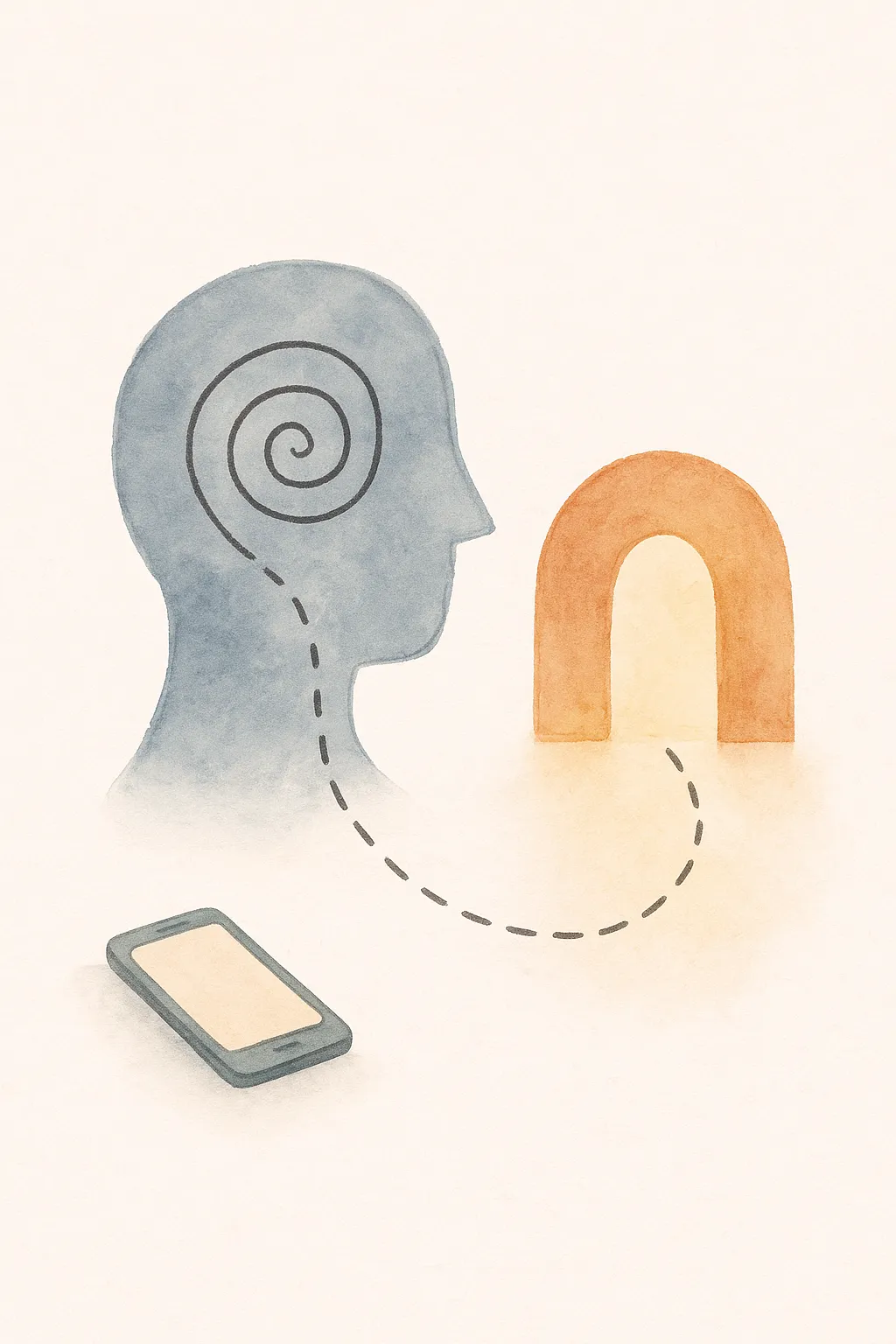
Here's the concept that changes how this whole thing works: The Approach Window. A window opens — a moment where the approach would feel natural, where they're available, where the context supports it — and it stays open for about three seconds before your brain starts building a case against it. Once it starts building that case, the window closes. Not because the moment is gone, but because your internal resistance has caught up.
This isn't a metaphor. There's real neuroscience behind it. The longer you wait after noticing someone, the more your prefrontal cortex generates reasons not to act — it's just doing its job of protecting you from perceived risk. The three-second rule isn't about being impulsive; it's about acting before the protection mechanism kicks into overdrive. If you've ever watched a window open and close while you stood there frozen, you already know exactly what this feels like.
In a bar specifically, windows are everywhere once you know what to look for. Someone's friend steps away to the bathroom and they're briefly alone — window. They glance around the room and land on you for a beat — window. They react to something happening nearby (a song comes on, a drink spills, the game makes a turn) — window. The key is that these moments have a natural conversational hook already attached. You're not manufacturing an opening; you're stepping into one that already exists.
Spotting them gets easier with practice. This is exactly the kind of scenario the Practice mode in Dating Coach is built for — running through bar scenarios until reading the room becomes second nature rather than something you have to consciously think about.
Before you read on — think of the last time you saw a window open and didn't take it. What was the exact thought that stopped you?
Take 10 seconds. The answer usually tells you more about your specific block than any general advice can.
How do you open a conversation at a bar without a rehearsed line or a gimmick?
The best bar openers are observations, not performances. You're not delivering a line — you're just saying out loud what you're both already experiencing. That's it. The bar gives you material constantly: the music, the crowd, the drink in their hand, the thing that just happened two feet away. What to say when you first meet someone is almost always simpler than people expect.
Here's what that looks like in practice. Say the bartender just did something unnecessarily complicated with a cocktail shaker and you both caught it:
Notice what didn't happen there: no compliment about their appearance, no "do you come here often," no question that puts them on the spot immediately. The opener creates a shared frame first. You're both looking at the same thing, reacting together. That's the warmest possible way to start — it's collaborative before it's personal.
If you want to flirt in person without it feeling forced, this is the mechanism: shared observation → light humor → genuine curiosity about them. That progression feels natural because it is natural. It's how humans actually warm up to each other.
Before your next time out, practice spotting Approach Windows in lower-stakes settings to build the reflex.
- Pick one public place you'll be in this week — a coffee shop, a bookstore, anywhere with strangers — and consciously notice three moments where a brief comment would have been natural. Don't act on them yet, just notice.
- For each one, write down what you would have said if you'd acted within three seconds. Keep it short — one sentence, observation-based.
- Next time you're at a bar, use one of those sentences. You've already written it. You've already rehearsed the impulse. Now you're just executing.

What mistakes kill a bar conversation in the first thirty seconds — and how do you avoid them?
The most common killer is the interview. You open fine, they respond fine, and then you immediately shift into a series of questions: where are you from, what do you do, do you live nearby. It feels like conversation but it reads like a form. The other person is answering questions, not talking to you — and that's a subtle but real difference in energy. Making conversation flow naturally means mixing statements with questions, not just firing questions and waiting.
The second mistake is over-explaining why you're talking to them. "Sorry to bother you, I just wanted to say..." is a preamble that signals you expect to be rejected. You don't need to justify the approach. You spotted a window, you stepped in — that's the whole story. Confidence isn't loudness; it's not apologizing for taking up space in a social environment designed for this.
Third: staying too long when the energy has shifted. If they've turned their body away, given two-word answers, or started scanning the room — that's information. Exiting cleanly is not failure; it's competence. "Nice talking to you" and meaning it is a skill. The people who get better at approaching without being awkward are almost always the ones who also learned to read the exit.
The fourth mistake is waiting for the conversation to become interesting before you invest in it. Early bar conversation is almost always surface-level — that's normal, not a sign it's going nowhere. Not running out of things to say in those early minutes is mostly about staying curious and following threads rather than trying to manufacture depth immediately.
How do you know if the conversation is going somewhere worth staying in?
The clearest signal is whether they're generating content or just responding. If you say something and they answer and then add something — a detail, a question back, a little story — they're in. If they answer and stop, the ball is back in your court and you're doing all the work. That's not a death sentence, but it's useful information about how much effort this particular connection requires.
Body language is the other layer. Are they angled toward you or away? Have they put their phone down? Did they laugh at something that wasn't that funny? These aren't tricks — they're the natural signals humans give when they're engaged. You already know how to read them; you just need to trust what you're seeing instead of talking yourself out of it. Signs someone is attracted to you in person are usually pretty legible once you stop second-guessing your own read.
The Approach Window concept applies here too, just in reverse. There's also a window for escalating — suggesting another drink, moving to a quieter spot, asking if you can join their group. That window opens when the energy is warm and closes if you wait too long and the conversation starts to plateau. Noticing it is the same skill as noticing the opening window. Act when it's there.
One more thing worth saying: a conversation that doesn't go anywhere is not a failed approach. It's a rep. Every time you step into a window, you're building the reflex. The people who are genuinely good at talking to people they don't know aren't naturally fearless — they've just taken enough reps that the fear stopped running the show.
If you're getting consistent signals that interest is there but you're not sure how to move things forward, expressing interest without seeming desperate is the next skill to work on. It's a different challenge from the approach, but it follows the same logic: read the context, act when the window is open, don't overthink the execution.
The bar was always on your side. The noise, the proximity, the shared context — all of it was already permission. What this article gave you is a way to see that clearly instead of treating the room like an obstacle. Next time you're there, you'll notice the windows. And you'll know what to do when one opens.
That's what changes when you practice this: not that the fear disappears, but that you stop waiting for it to. The window opens, you step in, and the conversation — whatever it turns into — is already further than standing there staring at your drink.