You're standing in a coffee shop. The person two spots ahead of you in line is reading a book you actually love, or wearing a jacket from a band you've seen live, or just laughing at something on their phone in a way that makes you want to know what it is. The window is right there. And then the line moves, they grab their cup, and they're gone.
That's the thing nobody talks about. Talking to a stranger isn't hard because you lack confidence — it's hard because the moment has a shelf life, and your brain spends the first three seconds negotiating instead of acting. By the time you've decided what to say, the window has closed. Not because you're shy. Because timing is a skill nobody taught you.
So the real question isn't "how do I become the kind of person who talks to strangers?" It's: how do you recognize the window when it opens, and how do you step through it before it shuts? That's what this article is actually about.
Why Does Talking to a Stranger Feel So Much Harder Than It Actually Is?
Talking to a stranger feels hard because your brain treats social uncertainty the same way it treats physical threat — it triggers a brief freeze response, and that freeze is exactly long enough to kill your momentum. The difficulty isn't a personality flaw. It's a timing problem dressed up as a confidence problem.

A lot of people assume the discomfort means something is wrong with them — that socially fluent people just don't feel it. They do. Research on social anxiety consistently shows that the anticipation of a social interaction is rated as significantly more stressful than the interaction itself. The gap between how bad you think it'll be and how bad it actually is? It's enormous, and it closes the moment you open your mouth.
The other reason it feels harder than it is: you're treating the stranger as a judge. You've cast them as someone who will evaluate you and deliver a verdict. But from their side, they're just a person standing somewhere, usually glad to have a brief human moment in an otherwise anonymous day. The "gatekeeper" framing is something your nervous system invented. It's not real.
Nobody teaches this skill explicitly. You're not born knowing how to approach someone without it feeling awkward — you learn it the same way you learn anything: by doing it enough times that the freeze response shrinks. That's the whole game.
What Is the Approach Window and How Does It Change the Way You Start a Conversation?
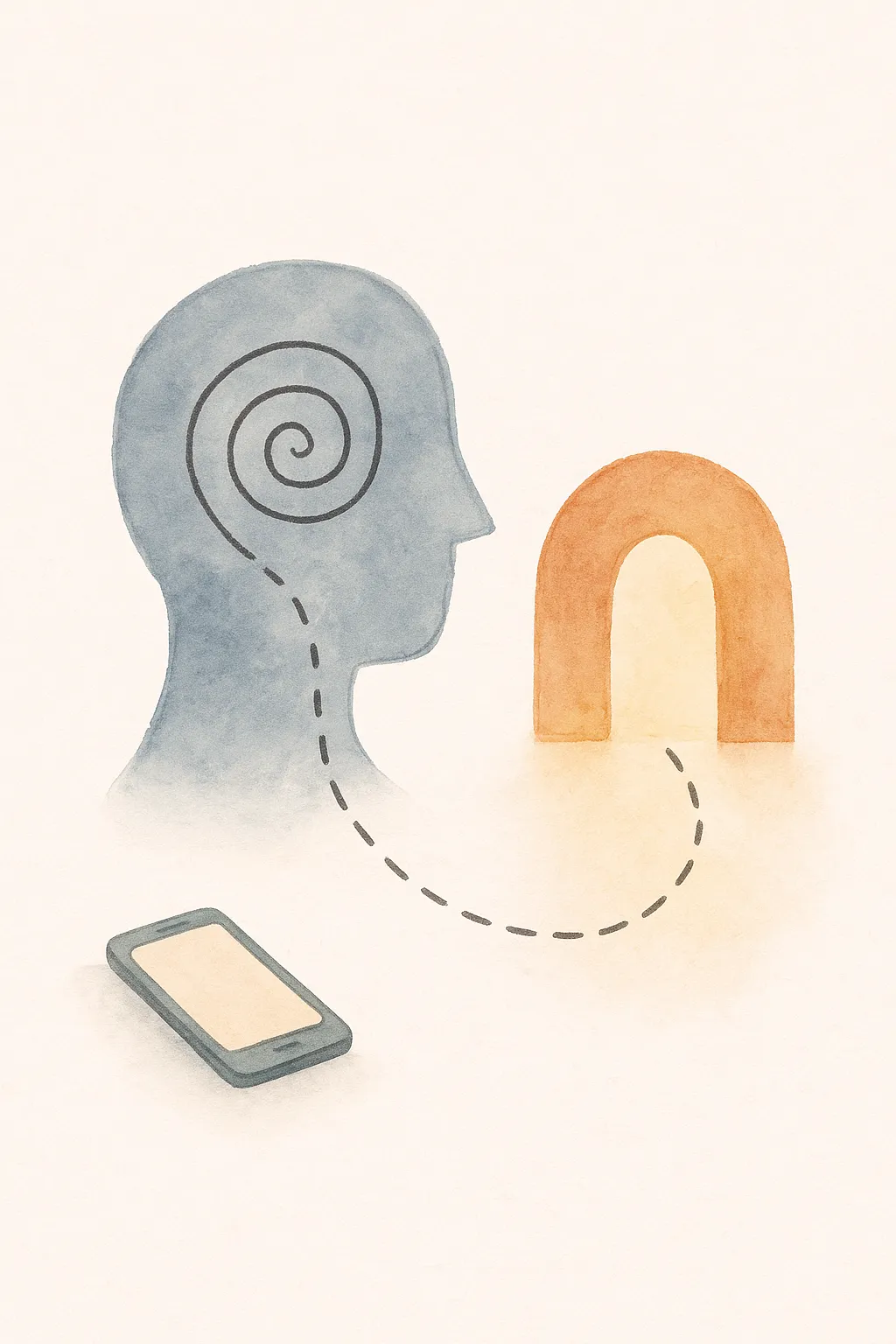
The The Approach Window is the brief, real moment when starting a conversation is natural — when context gives you an opening, when they're available, when the social geometry lines up. It opens fast and it closes fast. Your brain has roughly three seconds before it starts building a case for why you shouldn't bother, and once that case starts building, it wins almost every time.
This reframe matters because it moves the problem off your personality and onto your timing. You're not failing because you're not confident enough. You're failing because you're waiting for certainty before acting — and certainty never comes in social situations. The window doesn't wait for you to feel ready. It just closes.
Think about what actually happens in those three seconds. You notice the opening. You feel a small pull toward it. Then the analysis starts: "What would I even say? What if they're busy? What if it's weird?" By second four, you've talked yourself into staying quiet, and you'll spend the next ten minutes slightly annoyed at yourself. The window wasn't the problem. The three-second gap between noticing and acting was.
The practical shift: instead of asking yourself "should I say something?", ask yourself "is the window open?" If they're not on the phone, not mid-conversation, not visibly rushing — the window is open. That's your only signal. You don't need more data than that. This is exactly the kind of scenario the practice mode in Dating Coach is built for — drilling the recognition of open windows until acting on them becomes the default.
If you want to go deeper on the anxiety side of this, overcoming approach anxiety is its own skill set worth building alongside this one. But the window framework is the faster fix — it gives you something to act on in the moment rather than something to work through in therapy.
How Do You Actually Open a Conversation With Someone You Don't Know Without It Feeling Forced?
The opener doesn't need to be clever. It needs to be contextual. Something in the environment, something they're holding, something that's happening around both of you — that's your material. Context-based openers work because they're not about you performing; they're about two people briefly sharing the same moment. The same principle applies whether you're in a bookstore or starting a conversation with someone at a bar — context does the heavy lifting so you don't have to.
Before you read on — you're at a bookstore. Someone is holding a novel you've read. What would YOU say?
Take 10 seconds. Then compare with the example below.
Notice what that opener doesn't do: it doesn't compliment their appearance, it doesn't require them to evaluate you, and it doesn't demand much. It just creates a tiny shared moment. That's the whole job of an opener — not to be impressive, but to be an invitation.
The other thing that kills forced energy: trying to land somewhere specific too fast. A lot of people open with the hidden agenda of "I need this to go well" written all over their face. The person can feel it. When you genuinely don't need the conversation to go anywhere in particular, you're more relaxed, and that relaxation is contagious. Starting a conversation with someone you like works on the same principle — low stakes energy, genuine curiosity.
One more thing: your body does half the work before your mouth opens. A brief, easy smile and relaxed posture signal that you're not a threat and not desperate. You don't need to manufacture charisma — you just need to not look like you're about to ask for a kidney.
Pick one location you'll be in today — a café, a gym, a shop — and commit to entering one Approach Window before you leave.
- Before you arrive, decide that you'll say one thing to one stranger. Not a speech — one sentence. Context-based, low stakes.
- When you're there, identify the window: are they available, not rushing, not occupied? That's your signal.
- Act within three seconds of spotting the window. Don't edit, don't rehearse. Just go.

What Mistakes Kill a Cold Conversation Before It Has a Chance to Go Anywhere?
The biggest one: over-investing in the opener. People spend so long crafting the perfect first line that they enter the conversation already exhausted and slightly desperate. The opener is 10% of the interaction. The energy you bring into it is 90%.
The second mistake is not having an exit. Cold conversations work best when both people feel free to leave at any point. If you trap someone — physically or socially — they'll spend the whole conversation looking for the door instead of engaging with you. Giving a clear off-ramp early ("I'll let you get back to it" as a natural closer) actually makes people more likely to keep talking, because they know they can stop whenever they want.
A third mistake: treating silence as failure. A brief pause in a cold conversation isn't a sign it's dying — it's just a pause. Rushing to fill every gap with noise makes you seem nervous and makes the conversation feel pressured. Comfortable silences are actually a sign of ease. Let them breathe.
And the one that's hardest to spot: being too inside your own head to actually listen. If you're thinking about what to say next while they're talking, you're not present — and people can feel that absence. The best cold conversations happen when you're genuinely curious about the other person, not performing curiosity while mentally rehearsing your next line.
For a deeper look at what keeps conversations alive once they've started, keeping a conversation going covers the mechanics of momentum once the opener has done its job.
How Do You Know If the Conversation Went Well — and What Should You Do Next?
Here's the honest answer: most cold conversations that go "well" feel slightly anticlimactic in the moment. There's no dramatic spark, no obvious signal. What you're looking for is reciprocity — did they ask you something back? Did they offer information you didn't prompt? Did they angle their body toward you rather than away? Those are the actual signals, and they're subtle.
The clearer signs are when the conversation extends naturally past the obvious exit point. They had a reason to leave — the line moved, the bus came, their coffee was ready — and they stayed anyway. That's not nothing. That's someone choosing to extend a moment they didn't have to extend.
If you want to learn how to read those signals more reliably, spotting attraction in person breaks down the body language and behavioral cues worth paying attention to. And if you're wondering whether to push toward asking them out, asking someone out without it being awkward covers exactly that transition.
What should you do next? Depends on what you want and what you read. If the conversation was warm and you want to see them again, a direct and light ask works better than hinting. "I'd love to grab coffee sometime — are you on Instagram or do you prefer carrier pigeon?" is a real sentence that real people have used successfully. The specificity of the ask matters less than the ease with which you make it.
And if the conversation was fine but nothing sparked? That's also a win. You entered the window. You practiced the skill. The goal of a cold approach isn't always a date — sometimes it's just evidence that you can do it, which makes the next one easier. Building confidence in dating is a reps game, and every conversation — wherever it ends — counts as a rep.
The Approach Window closes whether you act or not. The difference is that when you act, something happens. When you don't, you're left with a slightly flat feeling and the same stranger walking out the door. That's the whole calculus.
Most people think they need to feel confident before they can approach. It actually works the other way: the approaching creates the confidence, not the other way around. Every window you step through — even the ones that go nowhere — recalibrates your baseline. The freeze gets shorter. The gap between noticing and acting shrinks. Eventually, the window opens and you're already moving.
The stranger was never the gatekeeper. The window was. And now you know how to read it.